
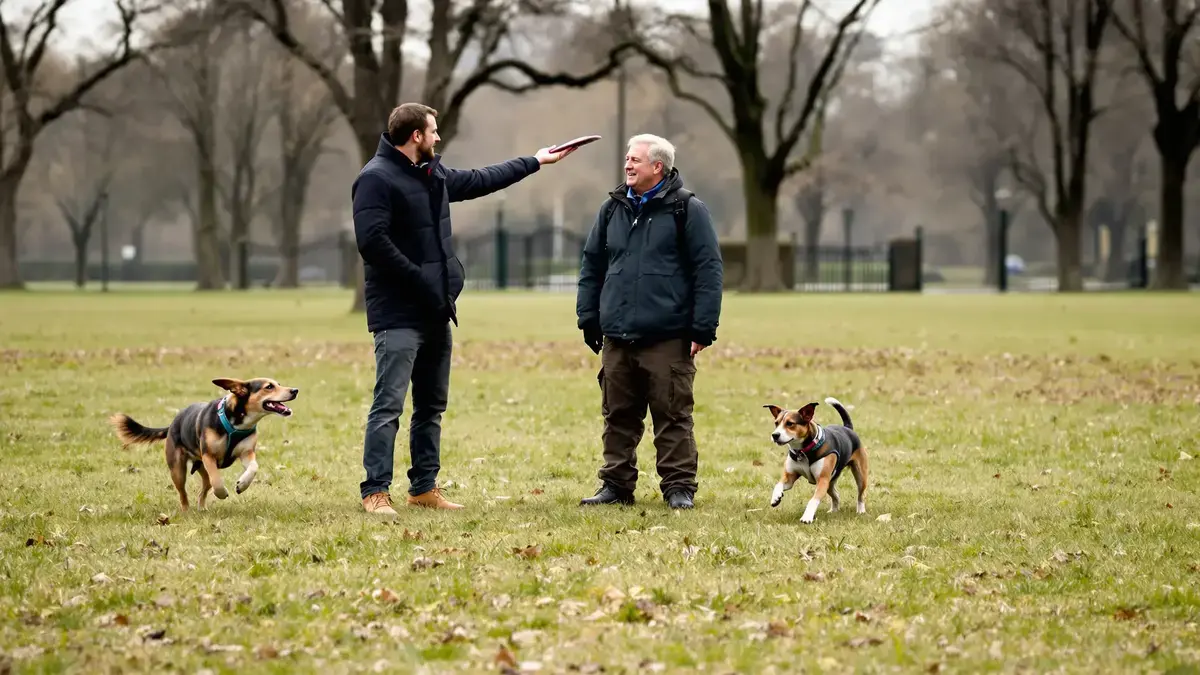

Outside, near the park gates, a Labrador chases a frisbee across wet grass, watched by a terrier with wiry fur and restless paws. They are so different—ears, snout, gait—yet they share a language of eager glances and wagging tails. The scene, easy to overlook, holds a quiet enigma: where did all this difference between dogs truly begin, and how far back does it reach?
Tracing Diversity Through Bones and Time
In a quiet, climate-controlled vault, ancient dog skulls rest side by side. Their shapes are as varied as the city dogs you pass on any walk—long-muzzled, blocky-headed, slender-jawed. Each skull comes tagged with a story from the distant past, some dating back 50,000 years.
Dog diversity, as it turns out, did not begin with the rise of kennel clubs or Victorian breeders with their detailed standards. Even in the early Holocene—some 11,000 years ago—domestic dogs were already drifting away from wolves in form and size. Differences show in the slope of a forehead, the breadth of a snout, the arch of a brow. By studying hundreds of these skulls with modern techniques, researchers uncovered deep patterns; changes shaped by much more than simple aesthetics.
Roles Shape the Canine Body
Long before pedigree papers and dog shows, humans relied on dogs for all manner of needs: hunting deer, hauling packs, keeping vigil through the night. Each job left a mark on the animals themselves. Skull size shrank after the last great ice sheets retreated, hovering close to human camps and fires. Then, around 8,200 years ago, new forms emerged—broader jaws or smaller frames, depending on what people asked their dogs to do.
Dog anatomy, it seems, is a living ledger of the many bargains struck across ages and continents. Where settlers needed a herder, shapes shifted toward agility. Where guards were prized, jaws strengthened and senses sharpened. The old bones tell of adaptation, not just to climate, but to human patterns of work, migration, and life itself.
Living Records of Coevolution
Every wagging tail on the sidewalk carries these deep echoes. The spaniel curled by a wood stove, the greyhound racing after a shadow—each reflects generations of partnership and necessity. Modern breeding sharpened the lines, yes, but the story began in campfire smoke, not polished show rings.
Dogs changed as people did. Their forms tracked migrations, settlements, and shifting ways of living. From ancient hunting camps to present-day city blocks, their bodies became a kind of archive—not just of their own journeys, but of ours. When you look at a dog and note the turn of its ear or twitch of its nose, you're seeing the record of lives entwined over millennia.
The Quiet Power of Shared History
Dog diversity, then, is not just a feature of modern life or a peculiarity of recent breeding. It is an old and ongoing story, etched in bone and muscle, shaped by needs, habits, and the subtle choreography between species. In every mongrel and show dog alike, the past persists—a testament to patient transformation, and to the simple truth that no part of their diversity sprung up overnight.
In this slow arc, the familiar becomes remarkable. Two dogs at play, traced backwards, remind us that our histories are always both shared and evolving.
