
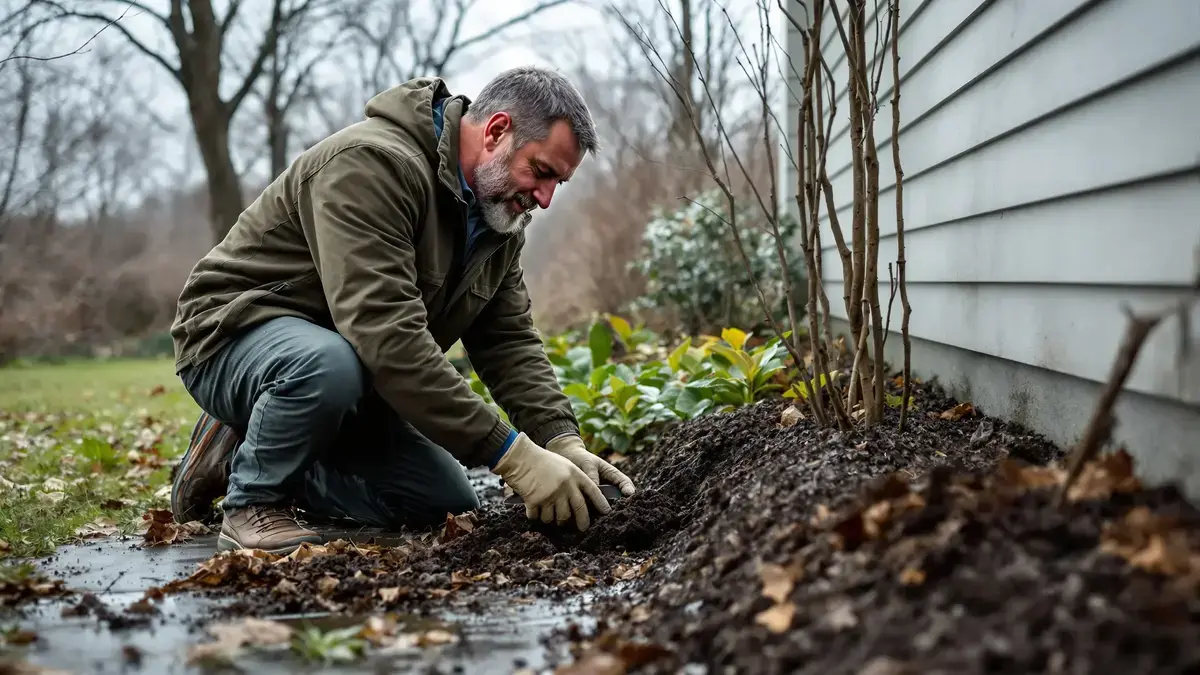

A quiet morning in February, the soil damp with recent rain, and nothing in the border but last year’s lifeless stems. The garden looks dormant, even overlooked—shadows pooling under a bare tree, a patch of earth untouched. Yet, beneath this surface, something has already begun. In these unlikely corners, a single, almost secret gesture will alter the way spring arrives.
A gardener’s early pledge to shade
Hands in thick gloves, the gardener stands by a north-facing wall, trowel in hand, considering a clutch of roots that look unremarkable at first glance. February’s air feels crisp. Around him, others wait for brighter days, but he prefers this hush—a moment to quietly prepare. He chooses hosta, a plant unassuming in winter, almost invisible, counting on its hidden promise.
The hosta is hardly a newcomer to the gardening world, but outside specialist circles it rarely claims center stage. Dormant now, it reveals nothing of what is to come: no colors, no movement, just a nub above the soil. But the gardener trusts its rhythm. While some only see possibility when the garden bursts to life, he sees it here, in this pause before the sap stirs.
Why February matters under trees and on shady paths
Planting now means the earth is receptive, even if cold. The winter dormancy gives hosta a head start. Its roots settle quietly, making use of lingering moisture without competition from more demanding neighbors. The gardener has learned that fruit trees benefit from early planting for much the same reason: roots grow before the rush of spring, anchoring something future-rich that eyes can’t yet measure.
Soil is dug deep—a little wider than strict necessity—as if making room for more than just the plant. Draining is improved with stone or sand, and the hosta’s crown, neither buried nor exposed, sits exactly at ground level. Water seeps through, dislodging air pockets before being sealed with a modest mulch. Flakes of bark, old leaves, or well-rotted compost wrap around, but never over, the still-dormant crown. It’s a quiet act, done with the idea that insulation and humidity will be as important as sunlight.
A transformation where little else succeeds
There are places in every garden that seem stubborn: behind the shed, under the wide canopy of a tree, or against a wall that misses the midday sun. Hostas do not complain. Their wide, fleshy leaves will emerge in spring, unfurling with surprising speed. Some are apple green, some nearly blue, others painted with white or cream. Each fills space, crowding out bare earth with robust foliage.
While hosta is forgiving, it will protest if left to soak in puddles. The gardener watches soil moisture, but avoids fuss. Over-intervention leads only to heavy hands; hosta wants regular care, not overzealous attention, and shade more than sun. In a pot or in the earth, its roots occupy the ground quietly, becoming the framework for something bigger in months to come.
From silence to lush arrival
By the time others think of planting, a first flush of green ribbons has often appeared. The garden’s sleepy alcove—once neglected—starts to draw the eye. A gentle, rolling carpet. All from a plant few would have chosen in a rush, or noticed on store shelves in winter, when life is coiled tight beneath the ground.
Strong and steady, hosta needs little, if the groundwork is right. Water, mulch, a little patience, and the urge to resist full sunlight. That’s all. No spectacle in February, but a confident promise: the shade will become a highlight, border and under-tree filled out when the rest of the garden is only starting to stretch awake.
A deliberate green tapestry
Every spring, the transformation can feel sudden, although its roots are slow and deliberate—like an architect working silently before the reveal. Where the gardener knelt with muddy hands in the gray light of late winter, there now stands a sheet of leaves, cool and lush. No great drama, no high-maintenance routine. A corner once overlooked holds its own: vivid, grounded, and quietly spectacular.
In the flow of a year, these decisions shape more than a single season. A simple act in February, repeated year after year, helps turn idle spaces into the garden’s most restful places—welcoming not only green but a satisfaction that grows with time, quietly and richly.
