
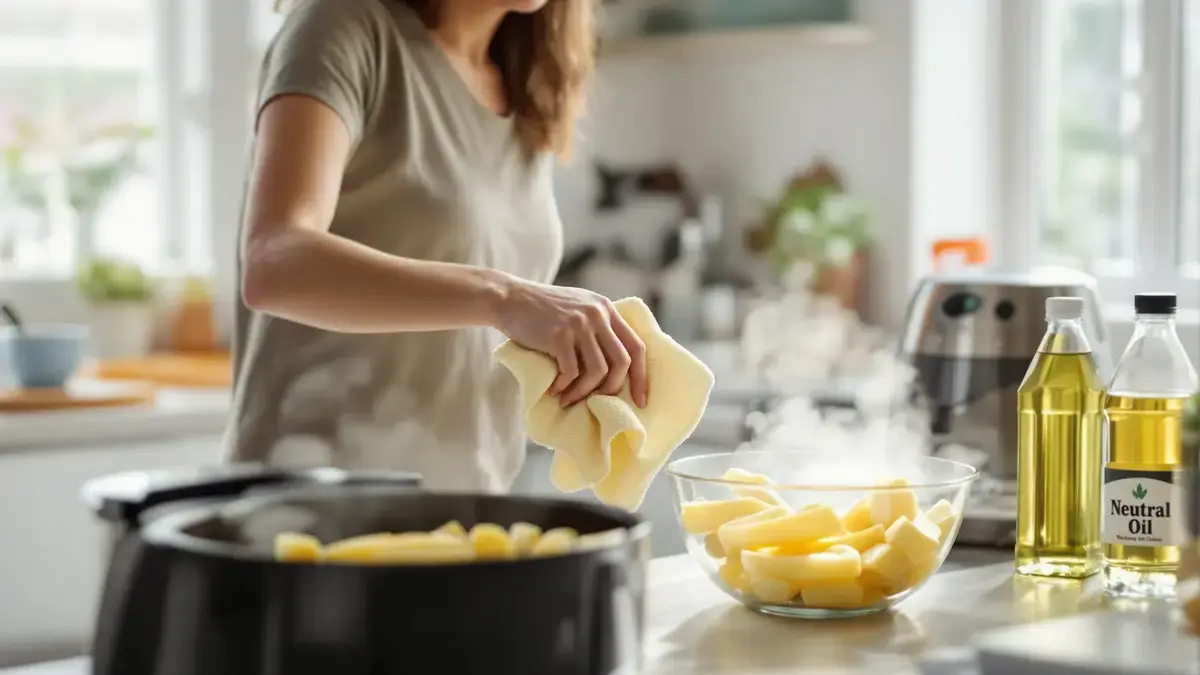

Steam glistens on a kitchen towel as freshly cut potato sticks rest nearby. Many who use an airfryer know the familiar letdown: fries that promise golden crunch but deliver a limp, chewy bite. Yet, a simple kitchen move—hiding in plain sight—turns ordinary fries into something crisp and fragrant, all in under half an hour. The secret rests in what you do before a single fry touches the basket.
Starch: The Hidden Villain of Soggy Fries
A sliced potato looks harmless on the countertop. Yet, just after cutting, a layer of surface starch gathers, barely visible but stubborn. This fine film traps moisture, creating a slick that makes it difficult for hot air to do its work inside an airfryer. The crust never forms. The fries, even after their cycle, lack the satisfying snap people expect.
The Hot Water Technique
Some advice says to soak potatoes in cold water. But hot water—steaming, not boiling—works faster. Dropping potato sticks into water at 70–80°C for about 10–15 minutes reveals a hidden transformation. The water clouds up. The starch lifts off, washing away like a dusty jacket revealed on a rainy sidewalk.
After their soak, the fries are not ready yet. Each piece needs to be dried well, as any surface moisture will block browning. A few motions with a towel, and they're ready to move on.
The Role of Oil and Airflow
A thin slick of neutral oil—just enough to lightly coat—helps the heat work its way in. Not all potatoes are equal: Floury types like Bintje or Agria build a crisp shell and hold a fluffy interior.
Spacing matters. Fries crowded in the basket cluster together, and airflow drops. One neat layer ensures every stick meets the circulating air, and thus, the promise of crunch.
Heat, Timing, and Texture
Preheating the airfryer to 180°C sets the stage for fast crust development. The fries cook for 15–20 minutes, with a quick shake halfway. Inside, the moisture stays gentle; outside, the edges brown and stiffen.
The aroma shifts during those minutes: first the quiet scent of warm potato, then a richer, roasted note as the surfaces crisp. That’s the payoff for the earlier prep.
The Final Touches
Seasoning comes last. Adding salt, spices, or cheese before cooking risks burnt notes and lost flavor. Tossing the fries with salt, or even a dash of flavored oil, while still hot, lets the taste cling without scorching.
Each fry, now golden, holds a gentle contrast—firm exterior, yielding middle. The texture change is obvious at first bite.
Why the Method Matters
While cold water soaks remove starch eventually, the hot water soak is both practical and effective. It clears the surface quickly. Drying is easier. The fries hit the hot air ready for that golden shell.
What seems a simple wash and dry—almost an afterthought—actually makes all the difference. The difference is apparent, not theoretical: fries that started out as pale sticks end as crackling, fragrant snacks.
A Small Shift, a Reliable Result
The success of airfryer fries comes down to patient steps and everyday science. Soaking, drying, oiling, spreading, and timing—small choices that add up. The technique doesn’t require new equipment or fancy ingredients. Just observation, and a willingness to let water and heat shape a familiar favorite into what it could be.
