
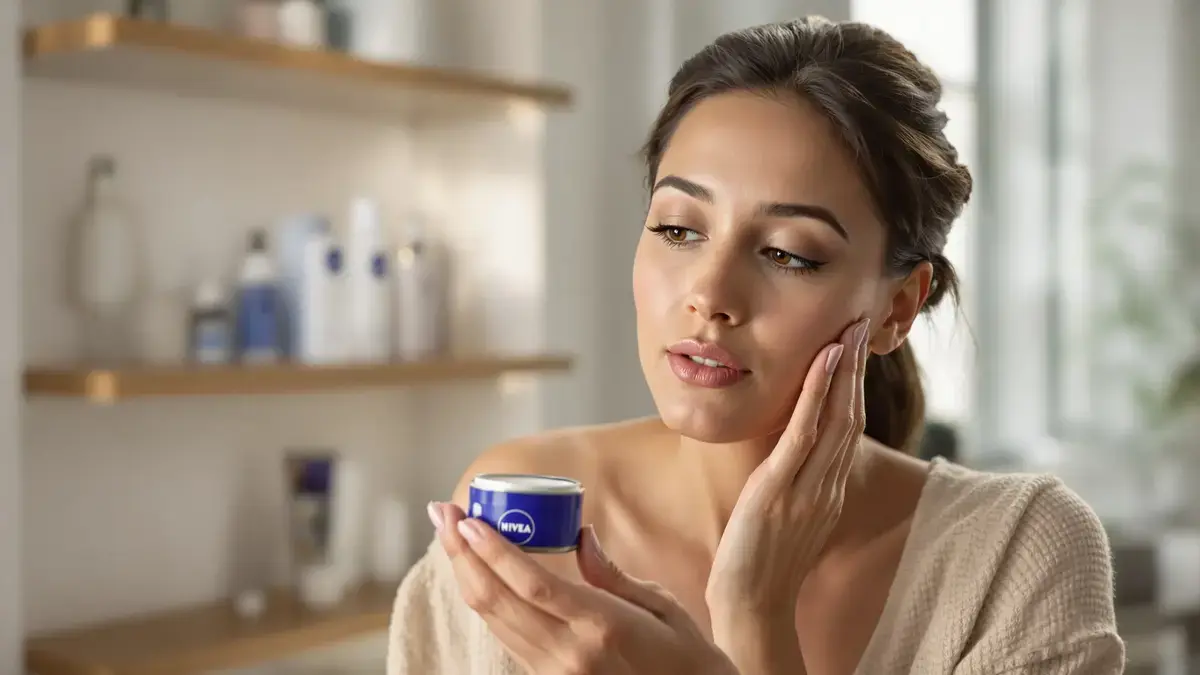

On countless bathroom shelves, a small blue tin sits quietly—a familiar sight that’s passed from one generation to the next. Its thick, creamy texture suggests comfort, a promise of smooth skin after a long day. But beneath its reassuring look, this iconic cream raises subtle questions about what really suits our skin, and if every tradition is as harmless as it seems.
The allure of a legendary blue cream
A walk through most homes reveals the Nivea blue cream, trusted to tackle dryness from winter winds or sun exposure. Its scent evokes memories—perhaps a grandmother’s gentle hands. The cream’s main ingredient, paraffin, is key to its hydrating power. This highly purified agent is approved by health authorities for cosmetic use and acts as a barrier on the skin.
What paraffin really does to your skin
Paraffin’s ability to lock moisture is not in doubt. When you glide it over dry patches, it creates an invisible seal, preventing water from escaping. This occlusive effect leaves the skin feeling softer, especially during cold months or after frequent handwashing. However, that same barrier traps more than just moisture. Sebum and tiny traces of impurities may stay beneath, setting the stage for trouble on certain skin types.
Who benefits—and who doesn’t
For those with dry or dehydrated skin, the sensation is immediate relief—a shield against discomfort and tightness. But for oily or blemish-prone skin, the story shifts. That protective layer can trap excess oil and lead to clogged pores. Individuals might notice small bumps or breakouts after repeated use. In these cases, the iconic cream works more like a heavy blanket, comforting for some, stifling for others.
Perceptions and debates around “natural” and “chemical”
Social networks amplify debates over what’s “natural” or “chemical.” The presence of paraffin, sourced from petroleum, feeds into that controversy. Experts emphasize that the ingredient’s safety is established, yet public opinion often lingers on its origin rather than its quality or performance. Transparency about ingredients helps consumers make informed choices—recognizing that what’s gentle for one may be unsuitable for another.
An individualized approach to skin care
Skincare is seldom one-size-fits-all. Dermatologists point out that a product’s reputation or legacy cannot guarantee compatibility with all skin types. Assessing your own reactions matters more than following family habits. When uncertainty persists, consulting with a healthcare professional is the safest way to avoid unintended irritation or breakouts.
The quiet presence of that blue tin on the shelf may signal tradition and comfort, but its effects are shaped by the skin it touches. Recognizing differences and reading ingredient lists carefully keep skincare rooted in observation and choice, even with the icons of yesterday.
