
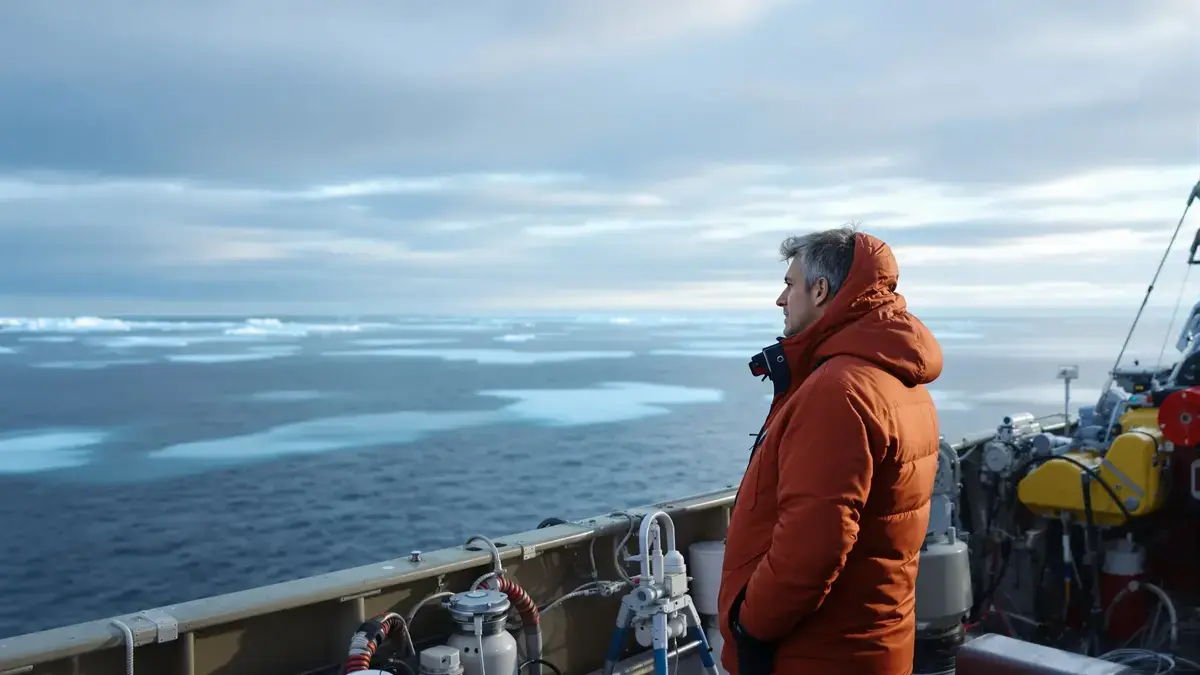

Near the edge of a map, far from busy cities, the Arctic Ocean’s ice spreads out like a pale, shifting mirror. Every September, people watch as this mirror shrinks a little more. For decades, it has never quite vanished. But now, a point once considered unthinkable draws closer: a day when the Arctic could be nearly free of ice, changing what this remote region means for the world.
Tracing the Slow Disappearance
Step outside on an early autumn morning and feel the chill in the air — yet, at the top of the planet, even the cold seasons are losing their bite. Over the past decades, Arctic sea ice has receded at a pace few expected, dropping by about 12 percent per decade. Satellites watch as the ice that once stretched easily across millions of square kilometers now withdraws, its borders tightening year after year.
Somewhere near mid-September, the sea ice reaches its smallest size. In recent years, these minimums have slipped lower, with September 2023 recording just over four million square kilometers, one of the smallest extents yet. The change, once gradual, is now tracked obsessively, each new benchmark sharpening concern.
What “Ice-Free” Really Means
It helps to picture the numbers: scientists talk about an “ice-free” day as one when the Arctic’s floating ice drops below one million square kilometers. This doesn’t mean zero ice, but the difference is still stark. For the first time in observed history, the ocean’s blue could stretch almost uninterrupted — a shift that is not physically abrupt but heavy with symbolism.
Climate researchers have turned to sophisticated models, simulating hundreds of possible futures. The striking result: the first ice-free day could arrive between 7 and 20 years from now. In some worst-case scenarios, that threshold could even be crossed within six years, especially if a few exceptionally warm seasons line up.
How Extreme Seasons Tip the Balance
Think of the pattern like taking off a winter coat a little earlier each year. Warmer autumns and winters mean less new ice forms. Springs show up ahead of schedule, robbing the region of its traditional cold spells. Then, when summer’s warmth arrives, the thin, fragile ice doesn’t stand a chance against extended periods over 10°C.
Heatwaves and fierce summer storms add further stress, hastening the melt. Three unusually warm years in a row can create just the right conditions. The models suggest that the first ice-free day is most likely to occur in August or September, timed with the annual minimum.
Changing the Arctic Baseline
Most people will not witness that day firsthand, but its meaning ripples out. The Arctic’s reputation as a place of enduring ice and snow is shifting toward something new: ice-free days stretching into weeks, then possibly months in decades to come. The old pattern of constant winter cover is giving way to something more variable and uncertain.
Still, scientists emphasize that this first event will not bring sudden catastrophe. Instead, it broadcasts a quiet signal — that an important threshold in the planet’s climate story has been crossed, one that once seemed far out of reach.
The Paris Threshold and Human Influence
Underlying this transformation is a familiar culprit: human-driven greenhouse gas emissions. The rapid changes line up closely with global warming projections, especially as world temperatures climb above 1.5°C — the limit set by the Paris Agreement, now possibly surpassed in 2024.
While future emissions reductions could slow the spread of ice-free days, the overall direction is set. The models show that even strong action now may only delay this milestone, rather than prevent it outright.
Looking Beyond the First Ice-Free Day
The image of a vanished “crown of ice” captures more than beauty lost. It marks a line crossed in our relationship with the natural world. The Arctic’s changing face sits under satellite eyes, quietly rewriting assumptions and inviting a new reckoning with a rapidly warming world.
There will be no great wave, no sudden roar. Instead, as the ice releases its hold, the silent margins of the map remind us: some boundaries, once exceeded, reveal a new landscape that remains in view — calm on the surface, yet altered at the core.
