
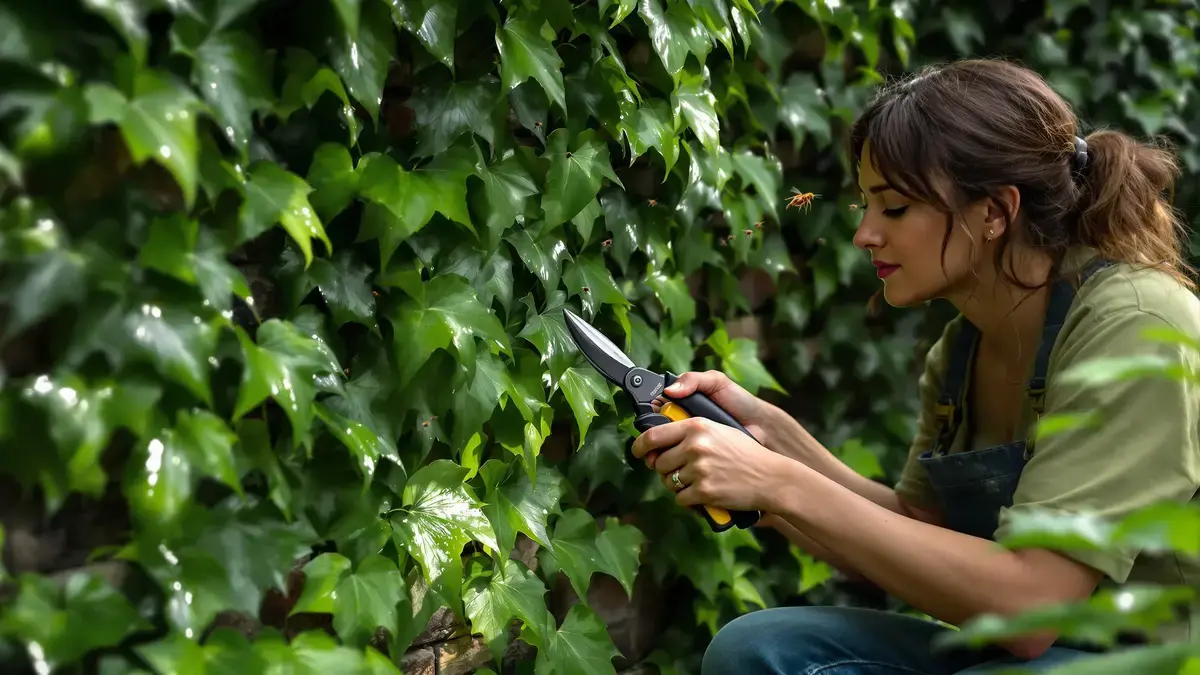

A warm afternoon settles over the garden. Ivy snake their way up the stone walls, green and undisturbed, the kind of quiet growth that invites a second glance. In the calm, it’s hard to see the undercurrent—the subtle transformation that happens when these handsome leaves take over. The leafy abundance hints at beauty and shelter, but something restless stirs beneath the surface, hidden away from casual eyes.
A Green Veil and Its Unseen Guests
Water drips from shaded leaves after rainfall, pooling at the roots where the ground keeps cool. The ivy stretches ever higher, weaving across fences and wrapping windowsills. Underneath, the air feels murky, as if a miniature world has sprung up in the shelter of its foliage.
That world is not silent. The ivy hosts a gathering: flies flit in and out, mosquitoes hover low and unseen, spiders crouch in the hollows. Ivy—Hedera helix, modest and evergreen—has a hidden draw. Its dense cover creates humid corners, the perfect microclimate for insects to lay eggs and multiply. A garden square that feels tranquil at a distance becomes, up close, a stage for constant movement.
The Balance Between Beauty and Trouble
For many, a garden is meant to be a retreat, a patch of calm where plants flourish and sunlight shifts gently though the day. The lushness of ivy fulfills part of that vision; it stays green all year, gives walls texture, and tempers the look of hard stone and brick. Yet its quiet domination comes with a side effect. More insects means more interruptions—swatting, brushing, the low whine of mosquitoes at dusk.
Of course, these insects are not strangers to the natural order. They pollinate, they feed the birds. But in numbers, their presence tips the mood of an outdoor space. When ivy takes up too much ground, the garden’s comfort becomes uncertain. What seems, at first, to be an inviting living wall slowly invites too much company.
Staying One Step Ahead of Overgrowth
Gardeners have found that ease can come from habits as simple as they are regular. Pruning back the ivy—to keep it light, less tangled—lessens the wet, sheltered pockets where insects thrive. This isn’t about wiping the slate clean. Nobody wants to strip a garden of life entirely. Instead, careful shaping helps restore the balance.
Some choose to plant natural allies, species whose presence ward off unwanted pests without chemicals. The fragrances of certain flowers, planted as borders, mingle with the green and send a quiet signal to the insect world to move on. Over time, this subtle adjustment ensures that ivy adds beauty without overwhelming the senses, allowing peace to return to the patio and the porch.
Lines Drawn in Leaf and Light
Managing ivy is less about control and more about understanding—when to let its tendrils roam, when to curb their reach. The effort means living with the garden’s rhythms and accepting that some wildness has its place—but only so much. Too much cover, too much stillness in the undergrowth, and the insects will come more boldly.
Hands in the dirt, shears in hand, the gardener looks for harmony above all else. The gestures are small—snipping here, planting there—but together, they shape the tone of the whole space. Ivy can stay, if invited with care and watched with patience.
Conclusion
Across many seasons, ivy continues to charm and challenge at once. Its steadfast greenery offers a kind of comfort, yet it quietly reshapes the spaces it inhabits. By reading the signs, and tending carefully, the garden remains a place of ease—alive, lively, but never overwhelmed by hidden guests.
