
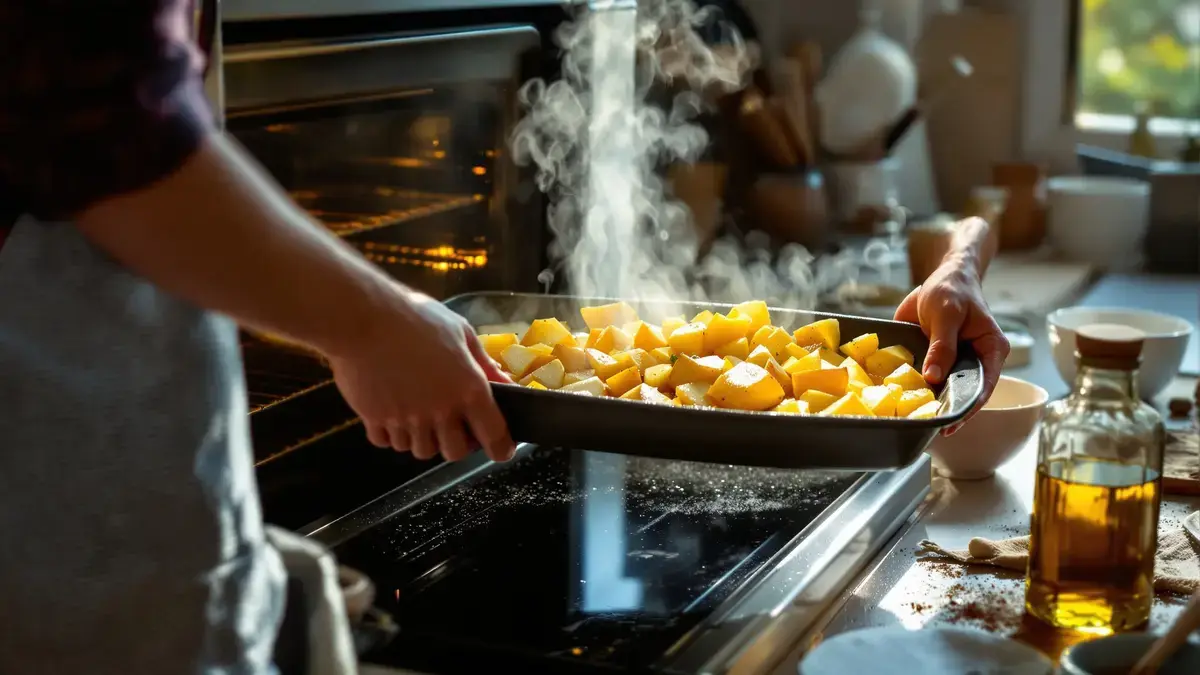

On a restless Sunday afternoon, a baking sheet of potato slices hisses in the heat, and a warm, salty aroma drifts around the kitchen—familiar, almost ceremonial. The reward, or sometimes disappointment, lies hidden in the oven: will the potatoes emerge with crisp, golden edges that crunch between the teeth, or will they collapse into tame, pale softness? Many have chased perfection on these simple trays, hoping for a moment of golden alchemy, but the secret often slips by, lost somewhere between memory and method.
A Familiar Quest in the Home Kitchen
The oven door opens with a gentle creak. Inside, unevenly cut potato pieces stretch across the tray, each with sharp corners and awkward shapes. Some carry tiny patches of skin that survived the hurried peeling. These details matter—they anchor the scene in the everyday, and they shape how the heat sears each facet, coaxing out crispness.
There is tradition in this, a ritual passed from generation to generation: peeling, rinsing, chopping, and the brief, urgent boil while the oven draws itself up to full strength. Yet for many, the crunch that marks the perfect roast potato remains elusive; the outside too often wilts, the inside smudges into bland uniformity.
The Key: Alkaline Alchemy
The breakthrough arrives not with gadgets or rare ingredients, but with a single, ordinary step; a spoonful of baking soda quietly transforms the game. When added to boiling, salted water, it changes the water’s pH and begins a subtle dismantling of the potato’s outer structure. Pectin, the substance that glues the potato’s flesh together, surrenders. Rough edges and fragile patches form—a purposeful kind of damage.
It is controlled chaos. As the potatoes tumble in the colander, steam escaping in silent wisps, a brief but vigorous shake turns their surfaces into something like velvet. Each rough patch, each fluff of potato nearly mashed but not broken, will transform in the oven. This is where the golden crust is born—not by accident, but by design.
Heat, Fat and Patience
The next steps trace their lineage to old kitchens in Britain and France, where cooks prized the double-cooked technique. Now, the roughened potatoes welcome a drizzle of hot olive oil. Garlic powder, smoked paprika, and cracked black pepper catch in every groove and fold.
Resist the urge to crowd the tray. Space is vital, allowing hot air to sweep around each piece, deepening color and crisping every surface. Some swap olive oil for duck or goose fat, chasing the lush, savory notes of centuries-old feasts.
As minutes pass, the aroma intensifies, then shifts; the kitchen fills with the whispering promise of a crackling crust, and you begin to hear the transformation—the brittle sound when a spatula taps a finished piece.
A Bit of History, A Touch of Gold
Few foods match the potato for humble mystique. Pulled from the Andean earth millennia ago, it traveled oceans, helping feed hungry nations and earning a kind of quiet reverence. Its journey into European kitchens was not always smooth, but with patience—and clever advocates—it became an everyday treasure, both nourishing and endlessly adaptable.
The double-cooking method stands out among culinary traditions, always chasing the same elusive outcome: pillowy softness sealed within a shatteringly crisp casing. Skilled hands might call the result edible gold. Children and elders alike know that first pungent bite when crust gives way to steam and yielding potato.
Pairing Richness and Refreshment
Freshly roasted, these potatoes seem to demand good company. A cold, high-acid white wine draws out their richness and refreshes the mouth between bites. Others reach for something light and red, a Pinot Noir or Gamay, or even a crisp, subtle lager—each choice highlighting the interplay between the potato’s humble heart and its gilded skin.
This plate, then, is more than comfort. It is canvas and memory, a subtle lesson in transformation by the simplest means.
A Result Worth Repeating
With every thoughtful step—peel, pre-boil, shake, and roast—the process honors a global tradition while embracing a trick of science and care. The reward: potatoes cloaked in a shell so crisp it sings beneath the fork, with a yielding core that holds warmth and nostalgia together.
In the kitchen, sometimes the smallest intervention delivers the boldest change. Here, simplicity does not mean compromise; it means mastering the art of just enough, and finding a piece of gold in every bite.
