
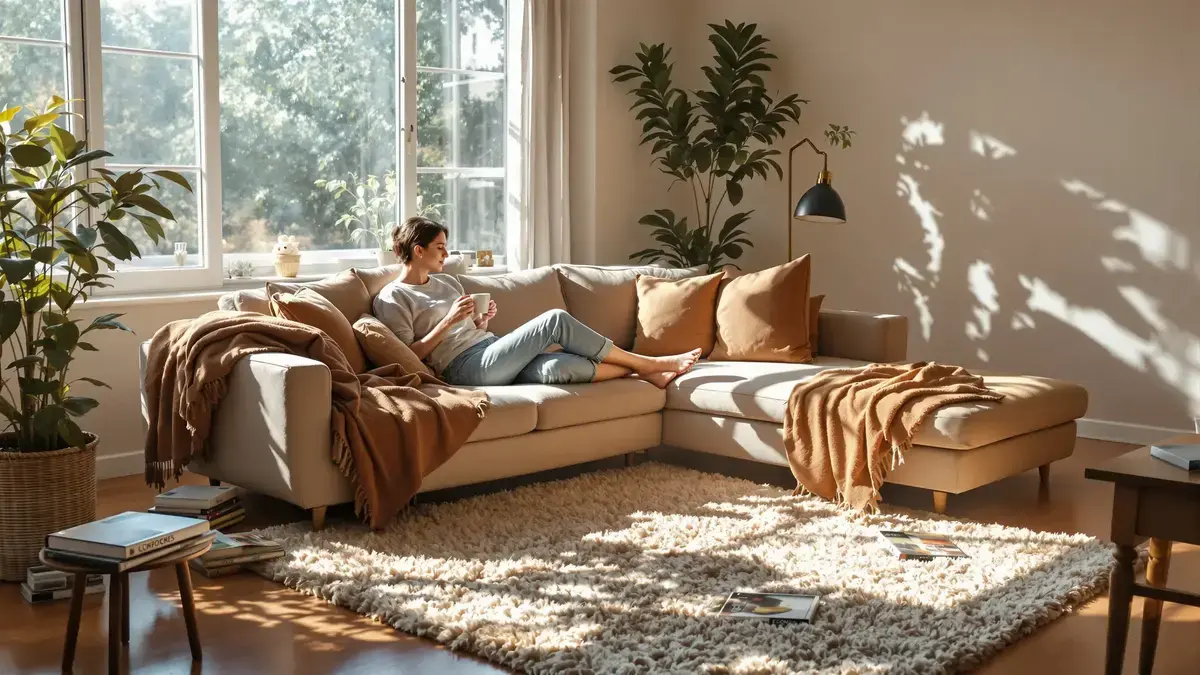

Afternoon sun drifts across the hardwood floor, highlighting footprints and soft shadows on a day that seems to invite company. The living room is as it always was — sofa wedged tightly against the wall, side tables just so — yet something in the air feels slightly stagnant. Behind closed doors, people wonder if comfort is simply a matter of where things sit. It’s a question that lingers, quietly, as winter deepens and daylight grows precious.
Noticing the Familiar
A chill radiates from the wall behind the sofa. Even the most thoughtfully arranged rooms sometimes retain this odd sense of constriction—like the air has nowhere to go. Sitting down, the perimeter closes in. A space designed for gathering pulls apart, everyone drifting to their corners, voices bouncing off the walls.
Moving Inward, Letting Space Breathe
Changing one thing—moving the sofa away from the wall—alters everything. As the piece drifts a foot, two feet forward, the room uncurls. Light finds new angles, stretching further across the rug. Suddenly, there is passage behind and around, softening the “hallway” effect that used to shape every conversation.
Each movement becomes less forced. The instinct is no longer to skirt the edge of the room but to cross through it naturally, with no set track. The air feels lighter, and so do moods, responses, exchanges over coffee or a pile of board games on a cold afternoon.
A Room for Living, Not Display
Distance from the wall rewards in unexpected ways. The sofa is warmer, now looking toward a window, a fireplace, or simply into the open space where laughter and stories gather. The arrangement encourages clusters—one group reading in an armchair, another sprawled out, snack bowl between them. There’s a sense of invitation, an ease that welcomes rest and play in equal measure.
Without partitioning, distinct zones emerge. Cushions, baskets, a sprawling rug delineate where things happen—watching a film, passing around mugs of tea—but sight lines stay open. Ribbed ceramic vases, earth-colored blankets, and layered throws deepen the mood, turning the ordinary into seasonal comfort.
Light, Materials, and the Movement of People
Morning sunlight reaches farther now. Lamps tucked behind the sofa—or even a scattering of candles—bring warmth to the center, erasing any sense of cold formality. There’s no need for heavy lifts or drastic changes. Accessories migrate with the seating: baskets for magazines, ottomans for tired feet, small benches holding stacks of winter throws ready to be grabbed without searching.
The right rug—spacious enough to anchor both sofa and chairs—creates a gentle boundary. Walkways of at least seventy centimeters ensure movement remains fluid. Behind the sofa, low shelves or plants keep everything grounded without cutting off space. The whole area serves multiple rhythms: a quiet morning with a novel, a spirited game night, a spontaneous family meeting.
Home That Changes With You
Rooms once forced into rigid symmetry now adapt. The living area yields to need rather than tradition. Winter calls for softness and gathering; summer brings a desire for openness and shifting light. Without moving walls or buying new furniture, homes reshape themselves to life as it happens.
Conversation flows more easily. The living room, no longer a waiting area, becomes part of the story—a background to the season, the laughter, the shared silences. Rearranged, it feels less like a museum and more like a place to linger.
Rethinking Space, Together
There’s no single formula for comfort, but the act of reimagining—pulling the sofa forward, adjusting the accessories, allowing zones to mix—has a quiet power. Both in compact apartments and in larger, open-plan homes, the result is the same: more warmth, more flexibility, more living. Accessories nod to winter with thick, tactile materials and gentle color, grounding the moment in whatever is needed most.
The trend is visible, but its effect is far from fleeting. Moving the sofa away from the wall is an invitation—for sunlight, for conversation, for the ordinary joy of sharing a room. In practice, it opens the space the way a breath does, transforming not just the floor plan but the way a home is felt, day after day.
At the close of winter, experiments like these rarely get headlines. Yet for many, the simple discipline of shifting the familiar brings the world a little closer, one shared afternoon at a time. The living room finds new light, and the rhythm of daily life takes on a quieter, more comfortable shape.
