
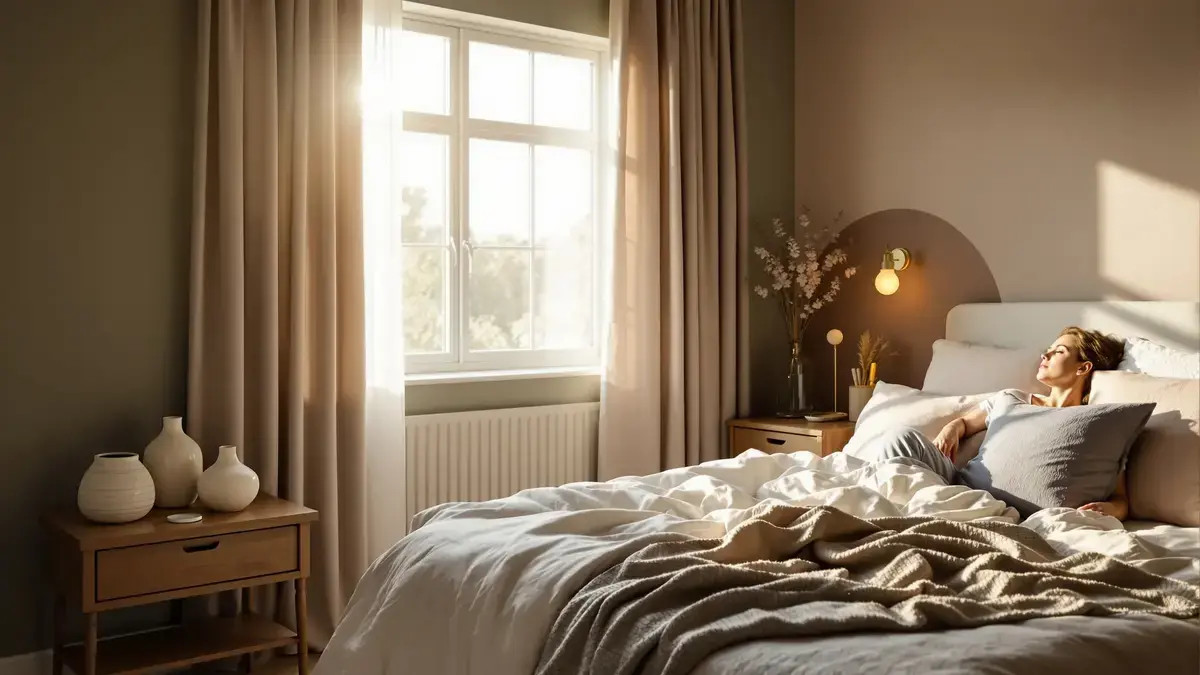

Sunrise filters slowly between the curtains, casting a gentle warmth over the room. Far from the stark, unyielding white boxes that once passed for style, this space feels different—more lived-in, quietly inviting. The air seems softer, tinged with something almost tactile in its comfort. It’s the kind of atmosphere you notice, even before understanding how it comes together—or why so many are seeking just this kind of peace.
Soft Transformations in Familiar Spaces
A nightstand brushed by a shaft of early light. Walls that curve into view without shouting for attention. Here, plain white is absent, replaced with hues that settle somewhere between subtlety and embrace. As bedrooms shift from showrooms to sanctuaries, there’s a movement toward colors inspired by the natural world—palettes you might find on a quiet walk, not the pages of a catalog.
Gone are the icy grays and clinical surfaces of the last decade. The current emerges slowly: sage greens and muted eucalyptus wrap around a space, hinting at forests and renewal. These shades, gentle on the eye, bring with them a sense of calm and a restorative energy, almost as if the outside world has been invited in—but only its most comforting notes.
The End of Sterility
Past trends leaned toward high contrast and sharp outlines—walls in pristine white, jarring against a single loud accent. In 2026, those boundaries have faded. Living rooms may play with personality, but for sleeping quarters, the aim is stillness—nurturing, enveloping tones that absorb light and soften corners. Taupes, nude neutrals, and the elusive mushroom shades sit comfortably in the background, offering protection in their warmth. These are not colors demanding attention, but they quietly shape the feeling of a room.
Boutique hotels and architects seem to understand this new sensibility. Their work suggests that you don’t need to repaint from floor to ceiling. A single feature wall in burgundy or earthy mauve, creamy textiles, a sprinkle of honey-toned wood—small touches alter the rhythm of a room. Lighting, too, plays a role: warm white bulbs and textured throws create a layering effect, one that invites rather than confronts.
Layering, Not Loudness
There’s pleasure in restraint—a pleasure found in plaster pinks that refuse to tip toward childish, or deep blues that echo the indigo of late evening. Chalky blues, so different from pastel clarity, offer a muted coolness, grounded by the right textures underfoot. The ensemble never feels abrupt. Instead, it unfolds gently, revealing itself as you move through the space.
Surfaces are not just painted but wrapped; even baseboards and moldings are drawn into the conversation through enveloping palettes. Earthy accents—dark taupe or rich chocolate—anchor the room. These additions are intentional, but never overthought. The result is an understated luxury that whispers rather than declares.
Small Shifts, Immediate Impact
A room designed this way doesn’t announce itself at first glance. Its comfort is discovered gradually, in the warmth of the bedding, the subtle variances between wall and trim, the way shadows play without harshness. Even for those hesitant to commit to full-scale change, small updates—a swap for off-white linens, a cushion in muted blush, a piece of ecru pottery on the nightstand—can redefine the mood.
The shift is less about reinvention than quiet refinement. What matters is not fashion, but a sense of ease that resists the abrupt and artificial. The approach to color is more nuanced—less about what’s seen, more about what’s felt. The feeling lingers after you leave the room.
Comfort as the New Signature
This evolution in bedroom color trends marks a turning point where design answers a real need: places that shelter, encourage deep rest, and ask little from us in return. Where serenity and depth matter more than statements. The new palettes, rooted in nature’s complexity, offer more than just style—they bring comfort and a sense of belonging to the everyday routine.
The movement away from cold minimalism isn’t abrupt, but deliberate. As more designers and homeowners turn toward these hues, it’s not just walls that are transformed, but the very feeling of home itself. In the end, the shift is about more than color—it’s a quiet, tangible luxury that settles in, unannounced.
