
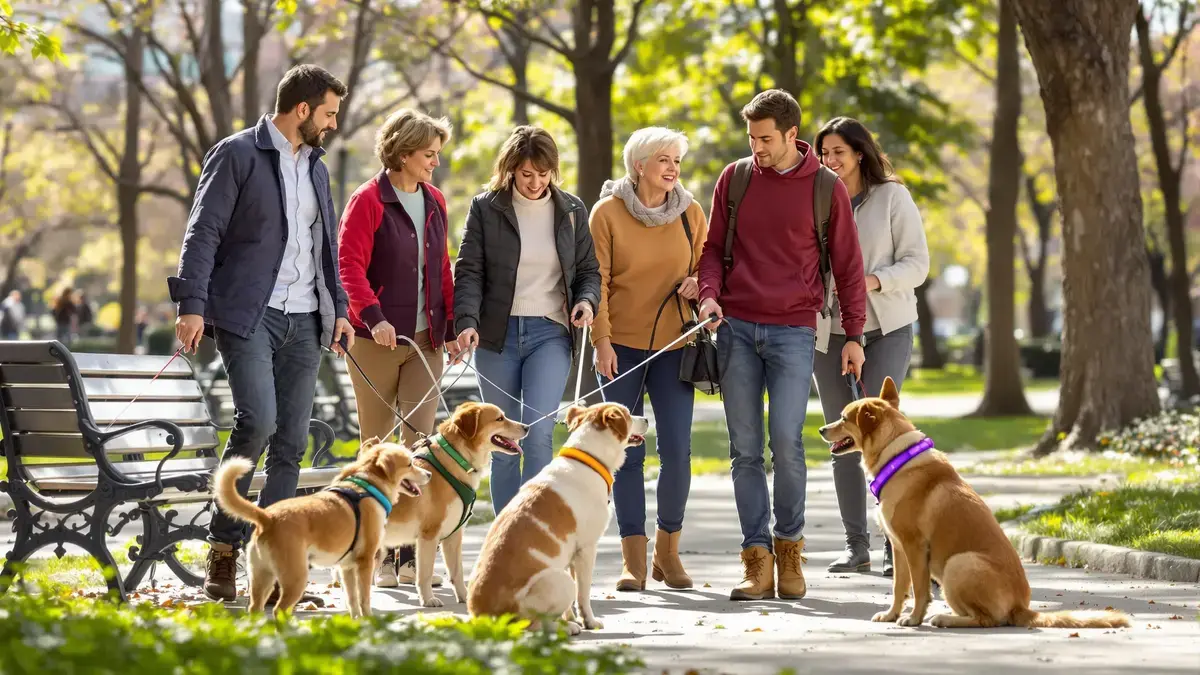

A slow, morning walk through the local park reveals an ordinary scene: people ambling, children clutching scooters, dogs weaving at the ends of leashes, their collars catching the light in unexpected ways. For a moment, a yellow flash stands out—a dog pausing behind a bench, eyes scanning, tail stiff. Nothing startling happens, but the mood shifts just perceptibly. Underneath the calm façade, there’s a hidden language at play, one that is as much about the people present as it is about the animals themselves.
A Signal in Plain Sight
Most days, a dog’s collar may seem just another accessory: blue, red, green, or perhaps a daring orange. On the surface, choices appear random or a matter of personal taste. Yet, the truth winds just below—collar colors can signal intention, temperament, even warning. They are, for those who notice, a quiet request for space or contact.
Children often want to greet every passing dog. Some adults do too, stooping low with hands outstretched, searching for friendly eyes. But the yellow collar near the bench isn’t just fashionable. It means worry, a need for distance, quiet intentions that only become clear when you know the code. On another leash, an orange band calls for even firmer boundaries. Not every signal is followed, not every owner even knows the unwritten rules.
When Signs Go Unread
A mistake is easy. A quick approach to a dog with a red collar—perhaps seen as a bold color, not as a warning—can create a tension that lingers long after. The human impulse is often to trust a wagging tail; the code, hidden in the open, suggests otherwise. Those red collars ask for caution, for patience, and, always, for consent from the person at the other end of the leash.
Other hues tell quieter stories. Purple marks dogs who must not be fed, perhaps for their health. Blue appears on animals in training—guides, future helpers, working dogs whose focus must not be broken. Green, brightest of all, sets the stage for friendly encounters; a dog ready to meet, to sniff, to move easily among others, human or canine.
Collar Colors and Social Navigation
Few stop to consider the silent choreography playing out in a park or on the street. Yet, these small details shape encounters. Pink signals a female in heat—perhaps a subtle nudge to keep others at bay. White stands out as well, marking dogs who sense the world differently, with impaired hearing or vision, needing a gentler approach.
The informality of the system is part of its complication. Not everyone participates. Sometimes the right color is just a coincidence, meaningful only by chance. Sometimes the meaning is lost, despite the collar’s attempt to speak. Still, for those who pay attention, these signals reduce the risk of unfortunate moments—a scuffle, a frightened bark, an injured hand or rattled child.
Between Caution and Trust
The world of dogs and people is dense with silent agreements and small misunderstandings. A simple walk becomes a conversation composed of eye contact, posture, and, quietly, color. Experienced owners will nod, gesture, or speak before letting you close. Others let their dogs lead, trusting in the color to speak for them, even if not everyone is fluent.
Dogs, of course, have their own languages—growls, wags, sidelong glances—but the collar acts as a bridge, a chance to make things smoother, less filled with guesswork. Just as traffic lights ease the movement of strangers, so do these colored cues, guiding feet and paws before words are ever exchanged.
A Quiet Code Among Companions
In practice, the dog collar color code is a soft formality—rarely official, sometimes missed, but capable of setting expectations and moods before anyone speaks. Some ignore it, others depend on it. When it works, it offers clarity and smooth passage through the subtle negotiations of shared spaces.
Across busy parks and shaded sidewalks, the subtle choreography continues, guided by flashes of color. Encounters pass mostly without incident, helped along by these understated codes. Among the many small signals we learn to interpret as we move through the day, few are as quietly consequential—determining not just a dog's ease, but the comfort of everyone around.
