
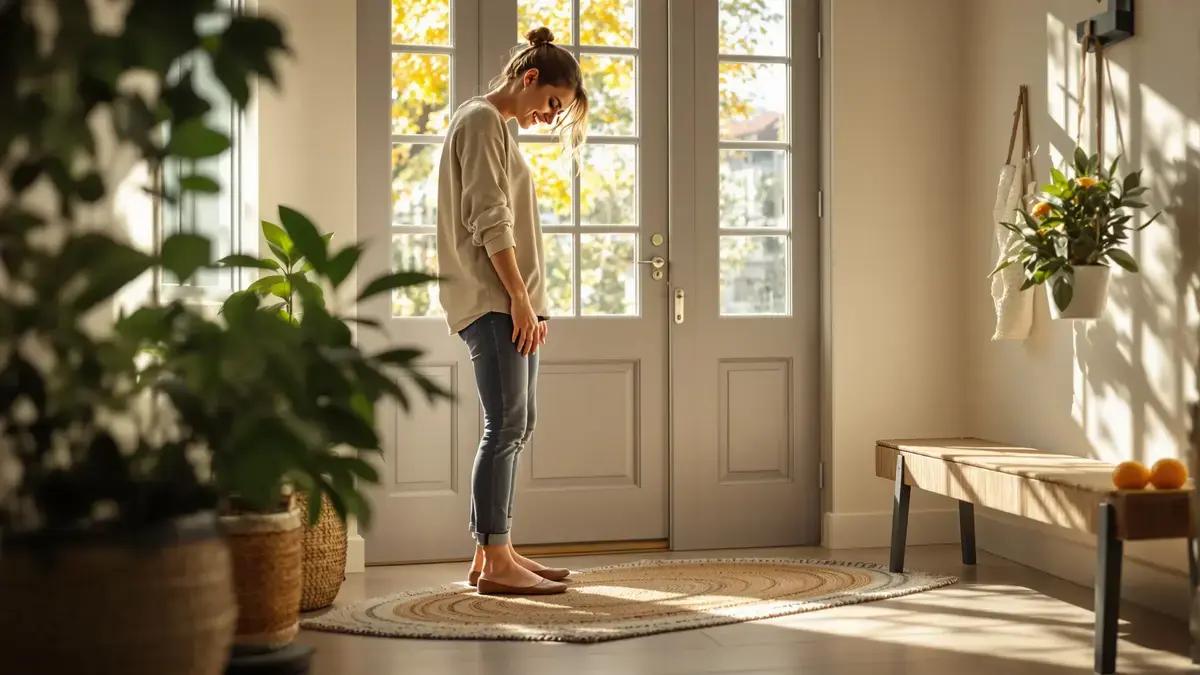

The door swings open to a scene framed by sunlight. Shoes lined up along the mat. A faint citrus in the air, neither sharp nor floral, just enough to notice upon entry. There’s a difference here, subtle yet unmistakable. Maybe there’s dust somewhere, but the place feels immediately more welcoming, as if tidiness were less about scrubbing and more about suggestion. This is where first impressions, light, and a dash of order hint at a clean house before a single word is spoken.
Light at the Threshold
The entryway acts as both welcome and warning. Pause here and you’ll sense what’s to come. A handful of stray shoes, perhaps, but they’re tucked away, not scattered. A basket rests nearby, half-concealed under a slim bench—ready to swallow up random odds and ends that drift through an ordinary afternoon. Anyone who has rushed ahead of arriving guests knows the instinct: gather, tuck, smooth the lines before greeting. The ritual works, even if it takes just a few minutes.
Surface Calm, Hidden Clutter
Move deeper and the pattern repeats. Surfaces are clear, not obsessively bare but free of daily debris. Mail deals with later. Keys return to a bowl, not a coffee table. It’s this ease of clearing—three minutes to whisk away what’s unnecessary—that transforms a room. The eye slides past what’s out of sight and settles on space, light, and gentle scent. Each gesture buys more calm than scrubbing ever could.
The Play of Light and Space
Windows matter more than most realize. A quick pass with a damp cloth restores them, dissolving fingerprints and smudges that dull a room. When sunlight falls through clean glass, everything appears sharper, fresher. A well-placed mirror can double this effect, bouncing the brightness deeper inside. Dark objects are pushed a little further from the natural light, so the brightness draws attention—and with it, a feeling of cleanliness. Sometimes, a drawn curtain, a new pillow, or just a neat doormat changes the feeling of the whole space.
Kitchens and Bathrooms: Small Corrections, Big Return
The kitchen can betray a home’s secrets. A clear sink and wiped counters open up the space, even if the rest is quietly imperfect. No one worries over hidden crumbs if the main lines are tidy. In the bathroom, streak-free mirrors and dry floors signal care in an instant. Folded towels, a tucked-away shampoo bottle—these habits suggest order, quietly reinforcing that this is a space maintained, not just cleaned.
Atmosphere Over Perfection
There’s an art to “faux clean,” where clever distractions matter more than chasing every particle of dust. Pillows straightened, throws draped just so, or soft lighting in the corners—all draw the eye where it should go. A dash of fresh linens, a calm scent, and the atmosphere changes entirely. The aim is not to achieve perfection but to set a tone. Visitors feel the effect even when they cannot name it. The order is visual, the cleanliness almost theatrical, staged with light, space, and a handful of props.
Routine, Not Routine Cleaning
Behind closed doors, the simplest routines hold the real secret. A few easy moves each night—a quick basket sweep here, a swift dusting there—make the next day lighter. These gestures accumulate. The house stays ready without ever demanding the kind of all-consuming chore that empties an afternoon. Cleanliness, in this light, is about consistency more than any single act.
Perception, Not Perfection
The truth is, most visitors can’t recall specific corners or countertops. What lingers is the feeling: brightness, gentle scent, a sense that life flows here, calmly and without friction. Tiny habits add up and make the home feel lived in, yes, but also peaceful and composed. Order, light, and the suggestion of freshness matter more than dust tracked in from the outside. This, more than any spotless detail, is the impression that endures, shaping both visitor experience and daily comfort.
