
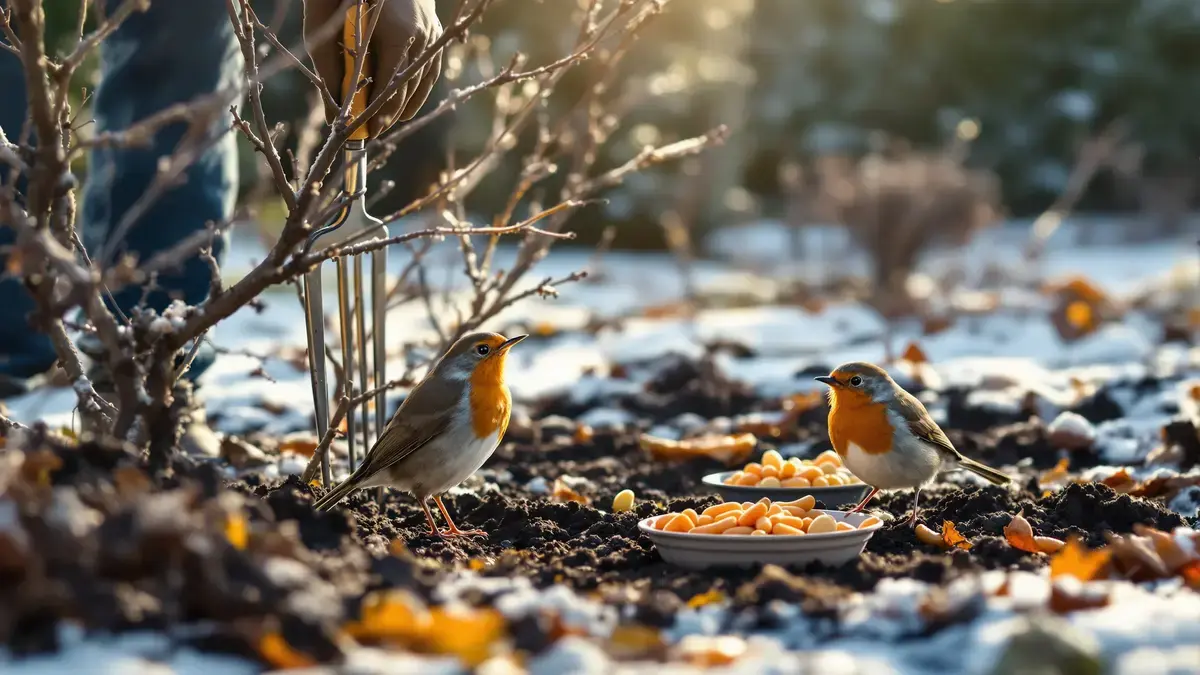

A chill hangs in the air, and the garden lies quiet—no flash of orange on the fence, no sudden dart across the frosty lawn. Many notice that as winter deepens, robins seem to vanish, their feeders left untouched. The puzzle is familiar: despite every effort to help, these birds slip away just when their bright presence is most needed outdoors. Yet, the answer may just lie beneath your boots, hidden in plain sight.
Why Robins Skip the Typical Winter Buffet
Most winter gardens are lined with feeders, swinging lightly in the wind and piled with fat balls or mixed seeds. It looks generous. Yet even as these offerings stay untouched, the robin—a regular winter companion—remains absent.
The reason is simple: robins are ground feeders. Their diet draws on the hidden world of soil; earthworms, small insects, and spiders form their daily menu. When winter hardens the ground—or leaves it barren and compacted—there is little left for them to find.
The Hidden Life Underground
Robins thrive where living soil is undisturbed: moist patches under hedges, tangled fallen leaves, or the shaded corner of a border. Hard paving, bare gravel, or frosted grass offer no such pantry. When their food sources disappear, robins quietly move on to richer patches elsewhere.
Even a casual stroll through the garden reveals their habits. Robins shadow the gardener, alert to every turn of a fork, waiting for the churned earth to reveal its treasures. Exposed ground insects are an open invitation.
A Small Gesture: Loosen the Soil
Experts suggest a targeted intervention. During cold spells, lightly loosen a square of ground—roughly the size of a large dinner tray—near a shrub or hedge. This gentle disturbance exposes earthworms and larvae that robins are quick to spot.
The process is straightforward. Use a garden fork to gently lift the topsoil, without turning the whole bed upside-down. The effect is immediate: the robin’s attention returns, drawn by the freshly revealed surface.
Fine-tuning the Robin’s Meal
Supporting robins goes beyond opening the soil. Offering the right food improves the odds. Place a shallow dish on the loosened ground with a mixture of mealworms, chopped apples, rehydrated raisins, or small bits of unsalted suet. If you include fine seeds—like millet or niger seed—keep them separate from peanuts or large sunflower seeds, which appeal more to larger, dominant birds.
It’s wise to use closed or mesh feeders for coarser seeds, and silo feeders for niger seeds to prevent waste and deter rodents.
The Importance of Location and Cover
Robins avoid exposed feeding spots where bigger birds gather. They prefer to feed low to the ground, near the base of a shrub or close to the safety of dense foliage. Position dishes or feeders within view of a nearby window, but out of reach of prowling cats.
Fresh water, too, becomes essential in the cold. A shallow bath, changed daily and no deeper than a child’s palm, provides robins with a safe drink even when puddles freeze.
Encouraging a Winter Refuge
A well-managed winter garden offers more than just food. Berry bushes and untouched corners thick with leaf litter encourage invertebrate life that robins need to survive. As the soil is stirred and insect life flourishes, robins are drawn back—sometimes within minutes of a gardener’s visit.
In this exchange, both the garden and visitor benefit. Each effort, from opening the ground to replenishing water and adjusting food types, transforms the space into a shelter for robins. The garden, for a few cold months, becomes a sanctuary where the robin’s return feels less like chance and more like a quietly earned reward.
