How to plan repairs to a commercial building
A leak, damaged façade or failing building element can quickly affect staff, customers and day-to-day operations. Set out the problem clearly, choose a repair route that fits the risk and check what has been completed before signing off.
By Daniel Foster · · 4 min read
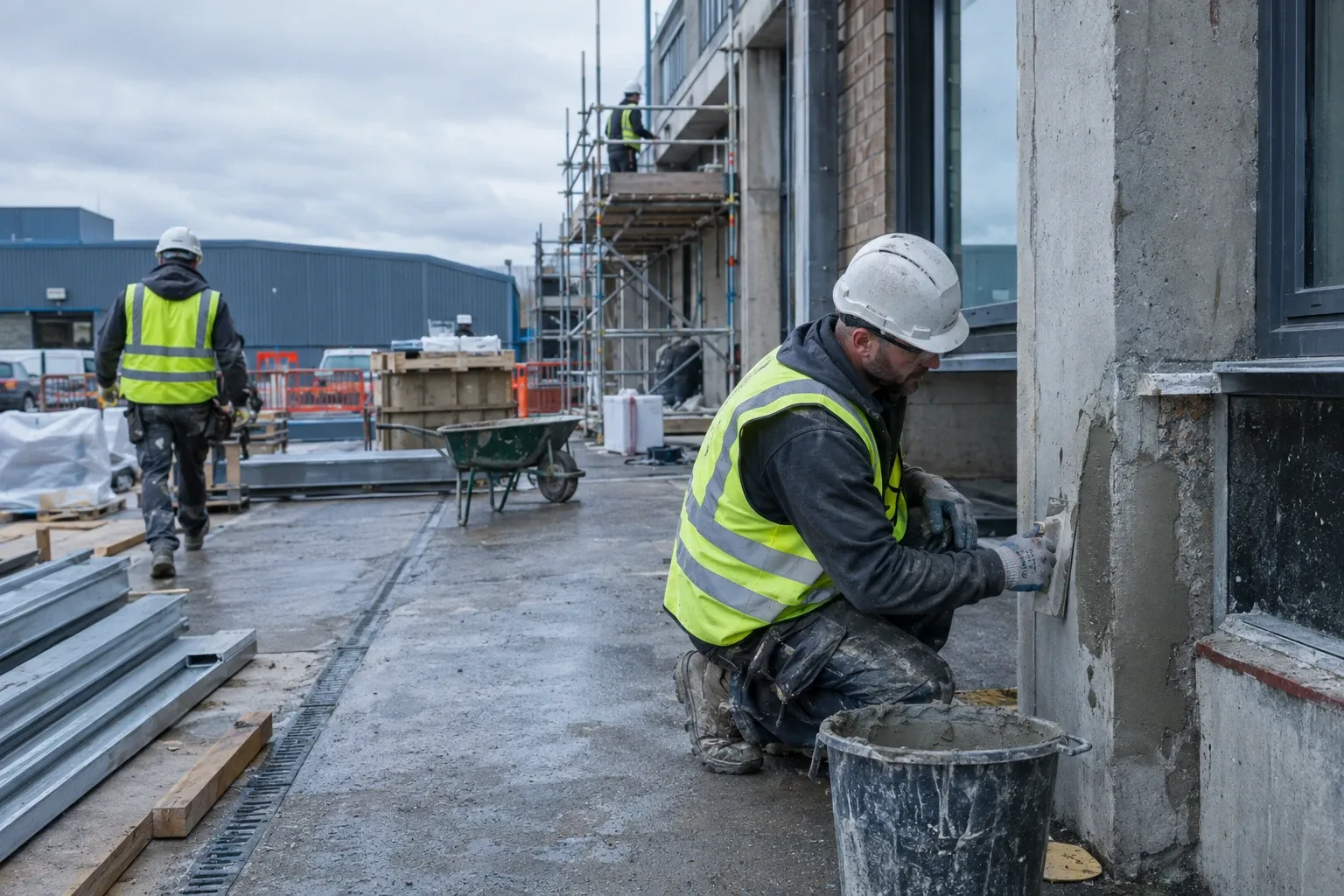
When a defect appears, the first decision is whether it needs an urgent response or can be investigated and scheduled. Either way, a clear scope helps you compare proposals on the same basis and avoid paying for work that does not address the underlying problem. Start by recording what you have observed, where it is happening and whether it is getting worse. Then consider access, disruption, responsibilities under your lease and whether the work may require building control approval.
What should you establish before arranging a repair?
Record the defect before anything is disturbed: its location, visible extent, when it appeared, any change over time and whether it is affecting occupied areas or business operations. Take dated photographs where safe and note temporary measures already in place. If there is an immediate risk to people or property, restrict access and arrange a competent assessment rather than waiting for a full repair specification.
Check who is entitled or required to instruct the work. In a leased building, the lease may allocate repairs between landlord and tenant and may set rules for alterations, access or approval. Also identify building-specific constraints, such as occupied premises, restricted access, sensitive equipment and working hours. A clear brief should say what is known, what remains uncertain and what the contractor is expected to investigate.
How do you compare repair options?
For a straightforward defect with a known cause, a direct repair may be enough. Where the cause is unclear, damage has returned or several elements may be involved, obtain a diagnosis or condition survey before committing to a solution. The RICS standard on planned maintenance describes inspection and reporting as a way to assess building condition and plan investment; it also distinguishes this from advice focused on immediate repair estimates. Ask for the right kind of inspection for the decision you need to make.
Compare proposals against the same written scope. Check whether each includes investigation, preparation, materials, access equipment, protection of occupied areas, waste removal, making good and any follow-up inspection. Ask bidders to identify assumptions and exclusions, explain how they will deal with newly discovered defects and separate optional work from essential work. The cheapest price may cover a narrower scope, so compare what will actually be delivered, the proposed sequence, disruption and any warranty or handover information.
What should your repair brief and contract cover?
Describe the location and observed symptoms, attach photographs or relevant drawings, and state what parts of the premises must remain operational. Set out access arrangements, site rules, working hours, protection measures and how the contractor should report unexpected conditions. Agree who supplies materials, arranges specialist access, removes waste and obtains any required approvals. Keep the agreed scope, price basis, programme, change-control process and completion criteria in writing.
For construction work arranged as part of your business, CDM 2015 applies to you as a commercial client. The HSE says commercial clients must make suitable arrangements for managing the project, provide relevant pre-construction information and allow sufficient time and resources. Where more than one contractor is involved, the client must appoint a principal designer and principal contractor. Review the project arrangements proportionately to the scale and risks of the work, and use the HSE’s guidance on commercial client responsibilities to check the duties that apply. For broader procurement and project-planning considerations, see how to plan and manage building work as a business client.
How can you put the repair into practice safely?
Before work starts, agree the work area, access route, contact person and arrangements for protecting employees, customers and visitors. Make sure the contractor has the information needed to plan the job, including known hazards and relevant building records. If operations must continue nearby, agree how noisy, dusty or restricted work will be managed and how any change to the plan will be communicated.
Do not assume every repair follows the same building control route. The GOV.UK guidance explains that approval may be needed for some work and that the appropriate building control body depends on the building and project. Check the relevant requirements before work begins, especially where the repair includes more than like-for-like maintenance or the property is a higher-risk building. Record any decision about approvals and keep certificates or other compliance documents with the building’s records.
How do you check the completed work?
Inspect the repaired area against the agreed scope and completion criteria. Check that the original symptoms have been addressed, affected finishes have been made good and the work area has been left safe. Request information relevant to the work, such as product details, test results, certificates, warranties and recommendations for monitoring or follow-up. Photograph the result and record the completion date, contractor and any outstanding items.
If the defect returns or the repair does not match the agreed scope, report it promptly in writing with supporting photographs and ask for a proposed remedy. Keep the correspondence and inspection record with your maintenance files. If the issue concerns workmanship or an unresolved contractual dispute, your next step may depend on the contract and the parties involved; obtain appropriate professional advice before escalating it. For recurring problems, use inspection findings to plan future work rather than treating each occurrence as an isolated call-out.
Frequently asked questions
Do commercial building repairs need building regulations approval?
It depends on the work and the building. Some repairs and maintenance are exempt, while other work may need approval from a building control body. Requirements also differ for higher-risk buildings. Describe the proposed work to your contractor or building control professional and confirm the approval route before work starts.
Who is responsible for repairs in a leased commercial building?
The lease usually sets out how repair responsibilities are divided between landlord and tenant, but the answer depends on its wording, the affected part of the premises and any related agreements. Check the repair, service-charge and access clauses before instructing work. If responsibility is disputed or the cost is substantial, seek advice from a property solicitor or surveyor.
When should you use a building surveyor before arranging a repair?
Consider a surveyor when the cause is uncertain, defects recur, several building elements may be affected or you need an independent scope for comparing tenders. A survey can help distinguish visible damage from the underlying issue and identify where specialist input is needed. For a simple, clearly identified repair, a detailed survey may not be necessary.
In this section Construction