If you manage a small team, a risk assessment can feel abstract until you have to apply it to a delivery, a spill or a maintenance job. These fictional worked examples show how to turn a workplace hazard into clear actions, without presenting them as official IOSH marking criteria.
Training
Which workplace safety and construction training courses do UK employers need, and how do you choose a provider?
8 articles
Latest in this section
The section guide
Choose safety training that fits your managers’ work
By Daniel Foster · Updated on
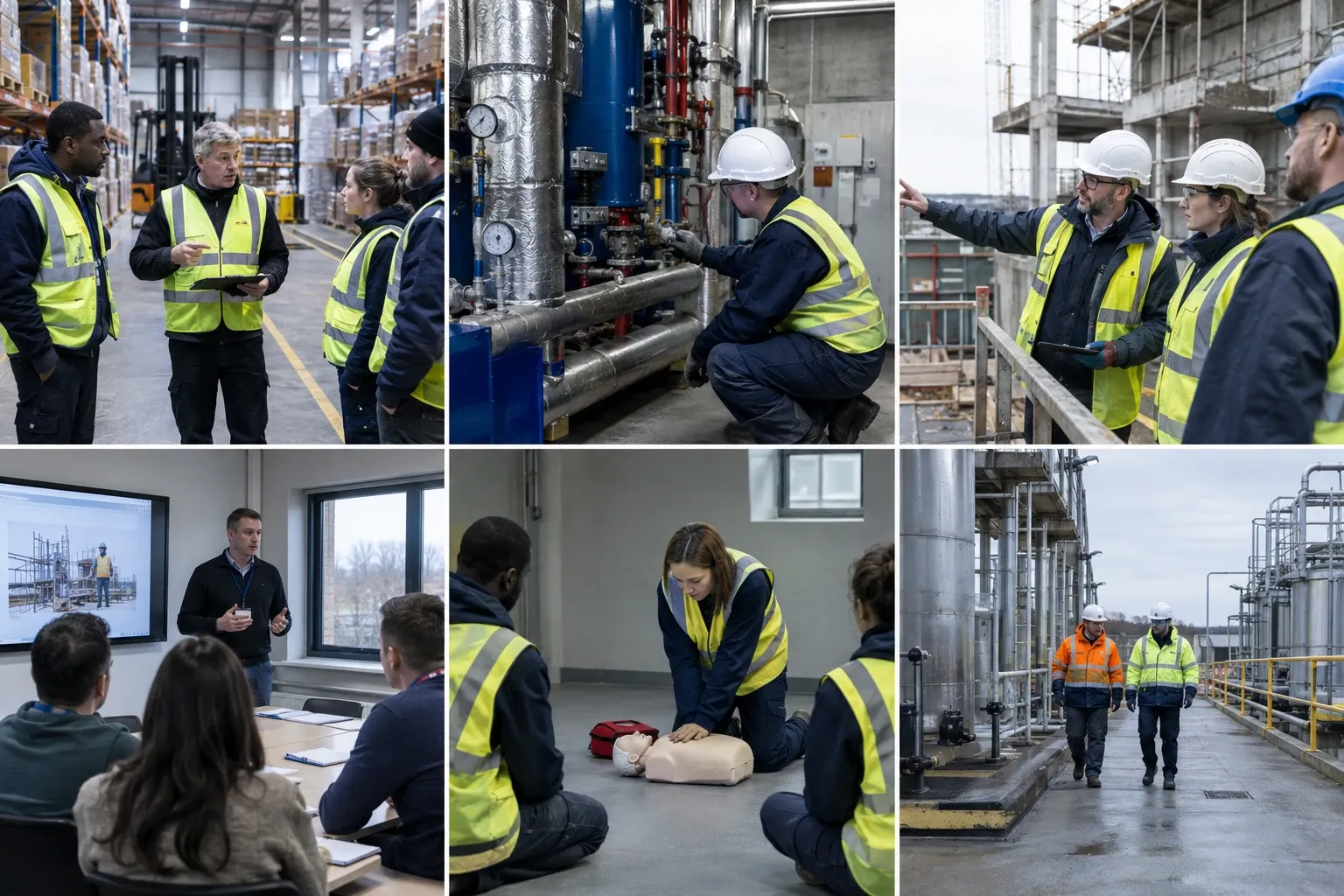
If you manage a small or medium-sized business, you need to decide which safety training will help people carry out their actual responsibilities. IOSH Managing Safely is one option for managers and supervisors, but it is not a substitute for training tailored to specific workplace risks or equipment. Use the criteria below to compare the course with your needs, choose a delivery format and check whether learning has transferred to the job.
What does IOSH Managing Safely cover?
IOSH describes Managing Safely as a course for managers and supervisors, covering responsibilities, hazard recognition, risk control, incident investigation and monitoring safety performance. Its published full course lasts three days; successful delegates receive an IOSH certificate. Check the current course outline and format against what your managers actually need to do.
The course is general management training, not proof that a person is competent to carry out every specialist safety task. If someone operates or supervises work equipment, for example, their training must address the equipment, its risks and the precautions required. HSE guidance on training for work equipment explains this role-specific requirement.
Which training should you compare it with?
Start with the job, not the certificate. HSE says employers should identify their training needs, set priorities, choose suitable methods, deliver training and check whether it worked. The legal duty is to provide adequate training for the risks and responsibilities involved, rather than to select one particular branded course.
For managers who need a broad introduction to safety responsibilities, Managing Safely may be relevant. For workers who need day-to-day safety awareness, a worker-focused course may fit better; for higher-risk work, you may need training specific to the task, equipment or site. Construction work can involve distinct hazards and duties, so consider what construction safety training covers before treating a general management course as sufficient.
How should you choose a provider and delivery method?
Check that the provider is listed in IOSH’s training provider directory for the course and delivery format you want. IOSH lists in-person, online and hybrid options, but availability depends on the provider. Compare the teaching approach, timetable, learner support, assessment arrangements and total cost, which IOSH says varies by provider, location and any tailoring.
Online delivery can reduce travel and make scheduling easier, but ask how learners interact with the tutor and apply the material to workplace situations. In-person teaching may suit a group that benefits from discussion and shared examples. For a closer look at online course delivery, check what is included rather than comparing formats by label alone.
How can you put the choice into practice?
Before booking, write down who needs training and why. Note each person’s responsibilities, the hazards they oversee, any gaps identified through supervision or incidents, and the dates or operational constraints that affect attendance. Give this information to the provider and ask how the course content and assessment address your needs.
If you are considering a refresher, check that the person has already completed the full course and ask whether an update is suitable for their current role. IOSH describes a one-day refresher for previous delegates. Review the refresher course details and compare the timing with changes in your workplace and management duties.
How do you check whether the training worked?
A certificate shows course completion, but you should also check whether the person can use what they learned. HSE recommends reviewing training effectiveness. After the course, discuss relevant hazards with the delegate, observe how they apply controls and check that they know when to escalate a concern or seek competent advice.
IOSH says the course includes assessment. Ask the provider what learners must complete and how results are recorded; its course information says certificates can be verified online. Explain the assessment and exam arrangements to learners in advance so they know what to expect.
Keep a simple record of the training, the role it supports and any follow-up needed. Revisit the decision when responsibilities change, new risks arise or monitoring shows a knowledge gap. HSE’s guidance on organising workplace safety training provides a step-by-step approach to identifying needs and checking outcomes.
Frequently asked questions
Is IOSH Managing Safely a legal requirement?
The course itself is not a universal legal requirement. Employers must provide adequate health and safety training appropriate to workers’ roles and risks. Decide what training is needed from your workplace risk assessment and responsibilities, rather than assuming one named course meets every requirement.
Does the IOSH Managing Safely certificate expire?
IOSH says the certificate does not expire, but recommends refresher training to keep knowledge current. Check the current course information and consider changes to the person’s duties, workplace risks and relevant rules when deciding whether further training is appropriate.
Can staff take IOSH Managing Safely online?
Online or hybrid delivery is available from some providers, alongside in-person courses. Availability and the learning format can vary, so ask how the provider handles tutor support, participation, assessment and any practical application before booking.