How to scope and manage a commercial roof repair
A roof leak can disrupt work and damage stock, equipment or the building fabric. The right repair starts with identifying the cause, agreeing safe access and defining exactly what the contractor will inspect, fix and report.
By Daniel Foster · · 4 min read
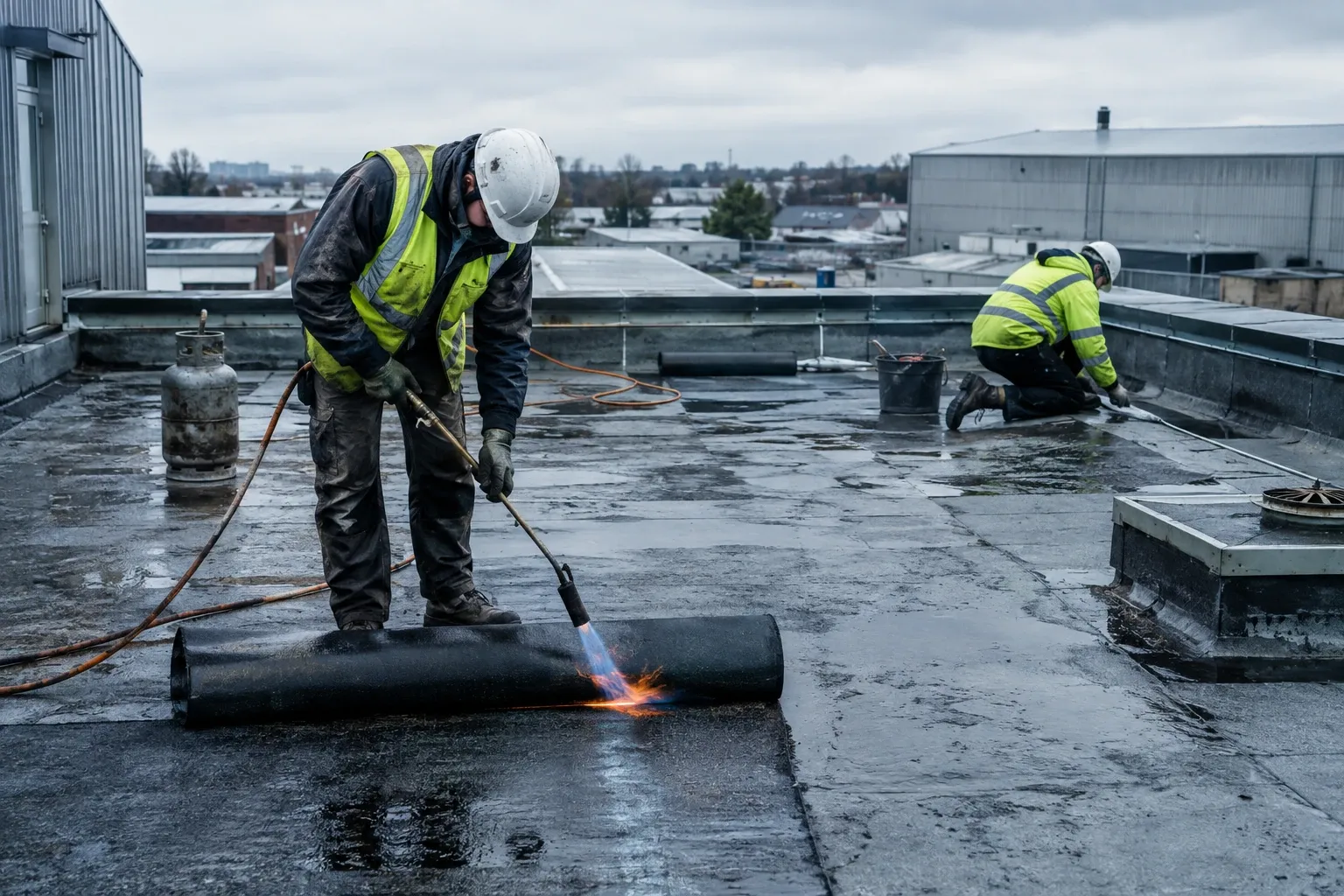
Before you ask for prices, gather what you know about the leak: where it appears inside, when it happens, and whether it worsens in particular weather. Water can travel beneath a roof covering, so the visible stain may not be directly below the defect. A clear scope helps you compare proposals on the same basis and decide whether a local repair is appropriate or whether the roof needs wider work.
What should you establish before requesting a repair?
Record the leak’s location, when it occurs, how often it has happened and any visible damage. Note whether water appears after prolonged rain, wind-driven rain or a particular building activity. Take dated photographs from safe positions, but do not climb onto the roof to investigate. Check for previous repair records, roof plans, guarantees and information about the covering, rooflights, drainage and any plant mounted on the roof.
A roofer may need to inspect the covering and details such as joints, upstands, penetrations, gutters or outlets to identify a likely entry point. Ask the contractor to distinguish observed defects from suspected causes, and to explain what further inspection would be needed if the source remains uncertain. Agree how the building and its contents will be protected while the leak is being investigated.
For wider decisions about planning and procuring building work as a business client, use the principles in managing a building project.
What should you compare in the proposed scope?
A useful quotation describes the location and extent of the repair, the materials and method proposed, access arrangements, protection for the building, and how debris will be removed. It should state what is excluded, how concealed damage or additional work will be handled, and what evidence you will receive when the job is complete. Compare like with like: a low price for a patch is not directly comparable with a proposal that includes investigation, replacement of damaged components and follow-up checks.
There are usually three broad approaches. A local repair may suit an isolated, accessible defect when the surrounding roof is in serviceable condition. A wider repair may be considered where several related defects are found or the original failure extends beyond the visible leak. Renewal of a larger roof area may be appropriate when deterioration is widespread, but it involves a different scope and should be assessed against the condition of the existing structure and covering. Ask the contractor to explain why the proposed extent is proportionate to the defects found, and what could remain unresolved.
If the leak is recurring, a repair may need to be considered alongside planned roof maintenance, so that drainage, joints and previous repair areas are checked routinely rather than only after water enters the building.
How will the contractor access the roof safely?
Roof work brings fall risks, including falls through rooflights or other fragile areas. The HSE says work at height must be properly planned and organised, and risks from fragile surfaces managed; its guidance for roof work also advises avoiding access onto fragile roofs where possible. Ask how the contractor has assessed the roof, what access equipment is proposed, how workers and building occupants will be protected, and what arrangements cover falling objects and emergency response. The HSE’s roof-work guidance is relevant to clients as well as contractors.
Agree who will control access, whether the work area needs to be isolated and how the contractor will coordinate with your staff and other site users. If the roof may contain fragile sheets or rooflights, do not treat it as safe to walk on without an appropriate assessment and precautions. Make sure the planned method, equipment and safeguards are clear before work begins.
Do building control requirements apply?
The answer depends on the work and the building. GOV.UK distinguishes general repair and maintenance from projects that may need building regulations approval, including some roof-covering replacement work. For England, the Planning Portal gives further guidance on work to an existing roof and describes circumstances where approval may be needed, such as structural alterations or work affecting significant proportions of the building envelope or roof. Check the precise scope with the relevant building control body before work starts if approval may apply; requirements can differ across the UK. See GOV.UK’s building regulations guidance and the Planning Portal’s guidance on existing roofs.
Put responsibility for checking and obtaining any required approval into the written scope. Do not assume that calling work a repair settles the question: the proposed materials, extent and effect on the roof may matter. If the contractor recommends a change from the original scope, check whether that changes the approval position before authorising it.
How do you manage the work once it is agreed?
Confirm the work area, site contact, access times, protection of stock and equipment, waste arrangements and how unexpected defects will be priced and approved. Set a clear process for variations: the contractor should describe the issue, explain the proposed extra work and cost, and obtain your approval before proceeding, except where immediate action is needed to prevent further damage and you have agreed how that will be handled.
If your contract includes a retention, make sure the amount, release conditions and timing are stated clearly rather than assumed. A construction contract retention is a contractual payment arrangement, not a substitute for a defined inspection and handover process.
What should you check at handover?
Ask the contractor to identify the area repaired and provide photographs or notes showing the completed work, any limitations and any remaining recommendations. Check that the agreed materials and scope were used, waste has been cleared and the affected area is left in the agreed condition. Keep records of any approval, product information, guarantee terms and follow-up inspection dates.
The leak stopping immediately is useful evidence, but it does not necessarily show that every defect has been resolved. Agree what to do if water reappears, who to contact and how quickly the contractor will assess the issue under the contract. Use the repair record to decide whether the roof needs further investigation or a routine maintenance check. ** ಪರಿಶ**
Frequently asked questions
Can we keep the building open during a commercial roof repair?
It depends on where work is taking place and how people, vehicles and materials can be separated. Agree access routes, exclusion zones, noise or dust controls, and any temporary interruption to operations with the contractor before work starts. If the leak affects electrics, stock or occupied areas, arrange suitable protection and escalation procedures rather than assuming the repair can proceed around normal activity.
Should we ask for a roof survey before repairing a leak?
A focused inspection can be useful when the leak source is unclear, there have been repeat failures, or the proposed repair covers a large area. Ask what the inspection will include, whether access is needed, what limitations apply, and whether you will receive photographs and a written record. A survey should help define the work, not be treated as proof that every hidden defect has been found.
What records should we keep after the repair?
Keep the agreed scope, quotation, changes, invoices, product or material details, photographs, and the contractor’s completion or inspection notes. Record any areas that could not be examined and recommendations for follow-up. These documents help you track repeat leaks, plan maintenance and explain the roof’s condition to a future manager, insurer or building professional.
In this section Construction