Keep your fire alarm service contract focused on safety
A service contract can help you arrange specialist inspection and maintenance, but it does not replace the checks your staff carry out or your own fire-safety responsibilities. Set out the system, visit schedule, fault process and records before you agree terms.
By Daniel Foster · · 3 min read
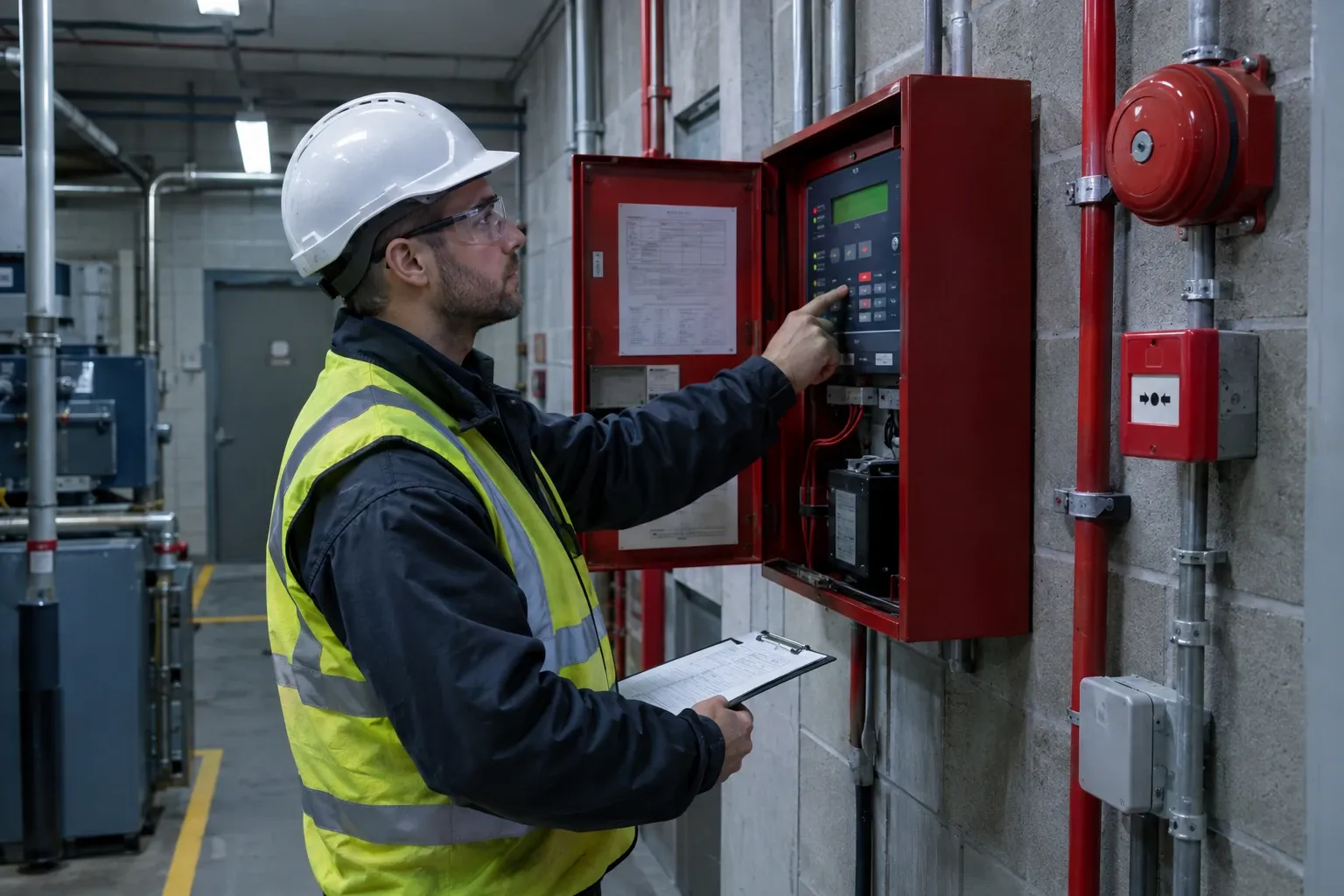
If you manage a workplace, you need to know who tests the alarm, who arranges specialist maintenance and what happens when a fault is found. A written contract can make those arrangements easier to manage, but the right scope depends on your building, alarm system and fire risk assessment. The practical starting point is to separate your routine in-house duties from the contractor’s work, then check that the contract makes the handover and records clear.
What should a fire alarm maintenance contract cover?
Start with an accurate description of the system and the premises it serves. Include the alarm panel, devices, zones, interfaces and any monitoring arrangements that the contractor is expected to inspect. Identify access restrictions, out-of-hours requirements and any other systems that may be affected during testing.
The contract should distinguish planned inspection and servicing from reactive work. Specify the scheduled visits, the checks and tests included, how defects will be reported, and whether repairs, parts and additional visits are included or charged separately. Ask for a written service report after each visit, with defects prioritised and any recommended action clearly identified.
The responsible person must ensure that relevant fire-safety equipment is maintained in efficient working order under Article 17 of the Regulatory Reform (Fire Safety) Order 2005. A contract helps organise the work, but does not transfer that duty wholesale to the contractor.
Which checks stay with your staff?
Specialist servicing is only part of the maintenance routine. Government guidance for offices and shops says fire detection and warning systems should be tested weekly in line with the manufacturer’s or installer’s instructions, with six-monthly servicing and preventive maintenance by a competent person. It also recommends keeping a log of tests, false alarms and maintenance. Read the government guidance for offices and shops alongside your fire risk assessment and system instructions.
Name the person who will carry out or oversee routine tests, check the control panel for faults, report problems and maintain the log. Agree how test results and defects will reach the site manager, including when the contractor is not on site. If your alarm links to a monitoring station, establish who will arrange any necessary notification before testing to help avoid an unwanted response.
For a wider schedule that coordinates alarm servicing with other building checks, use a planned maintenance programme that assigns responsibilities, dates and records.
How do service options differ?
A scheduled-service-only arrangement may suit a site that can organise repairs separately and manage faults internally. A broader contract may also include call-outs or specified remedial work, but the precise inclusions and charges vary by provider. Compare the written scope, not just the headline price.
Check whether the proposed visit frequency matches the applicable guidance and the needs identified in your fire risk assessment. Ask who will attend, what evidence of competence they can provide for your system, whether subcontractors may be used, and how service reports are delivered. If you have several premises or a complex system, check how the contract handles site-specific schedules, access and consolidated records.
How can you put the contract into practice?
Before signing, give the contractor your system records, recent service reports, known faults, site access details and monitoring arrangements. Ask them to identify any limits in the proposed scope, such as inaccessible equipment or devices that are not included. Record the agreed contact route for routine queries and urgent faults, and confirm how you authorise chargeable work.
At handover, make sure your staff know how weekly tests are carried out, how results are logged and who receives fault reports. Keep your own fire-safety records even if the contractor also supplies reports. Where responsibility is shared with a building owner or another occupier, agree who arranges access, testing and follow-up work.
How do you check the contract is working?
Review the service reports after each visit. Check that the contractor records the work completed, defects found and actions still outstanding. Track repeat faults, delayed repairs and any change to the system or premises that could affect the agreed scope. Escalate unresolved issues and update your fire risk assessment or arrangements where needed.
A contract is useful when it supports a clear maintenance routine and leaves you with evidence of what was checked and what remains to be done. If the work, responsibilities or reporting are unclear, resolve those gaps before the next service is due.
Frequently asked questions
Does a fire alarm service contract make the contractor responsible for compliance?
No. A contractor can carry out agreed inspection, servicing and repair work, but appointing one does not by itself remove the responsible person’s duties. Agree who manages weekly tests, reviews faults, arranges remedial work and keeps the fire-safety records. Where a landlord, managing agent or another employer also has control of part of the premises, clarify responsibilities with them rather than assuming the contract covers everyone.
How often should a workplace fire alarm be tested and serviced?
For the offices and shops covered by the relevant government guidance, the system should be tested weekly and receive six-monthly servicing and preventive maintenance by a competent person. The appropriate arrangements depend on the premises and system, so check the relevant guidance, your fire risk assessment and the manufacturer’s or installer’s instructions. A contractor’s visits do not replace routine testing by your nominated person.
Should the contract include repairs and replacement parts?
Check the wording rather than assuming these are included. Some contracts may cover inspection and servicing but charge separately for fault diagnosis, call-outs, labour or parts. Ask for the included scope, exclusions, authorisation process and charging basis in writing. You should also agree how urgent faults are reported and escalated, and what interim safety arrangements you will need to consider if the alarm is impaired.
In this section Maintenance