A practical maintenance plan for your business lift
A lift that is out of service can disrupt staff, visitors and deliveries, but routine servicing alone does not cover every safety duty. Find out how to set a maintenance schedule, choose a suitable contractor and keep examination records straight.
By Daniel Foster · · 4 min read
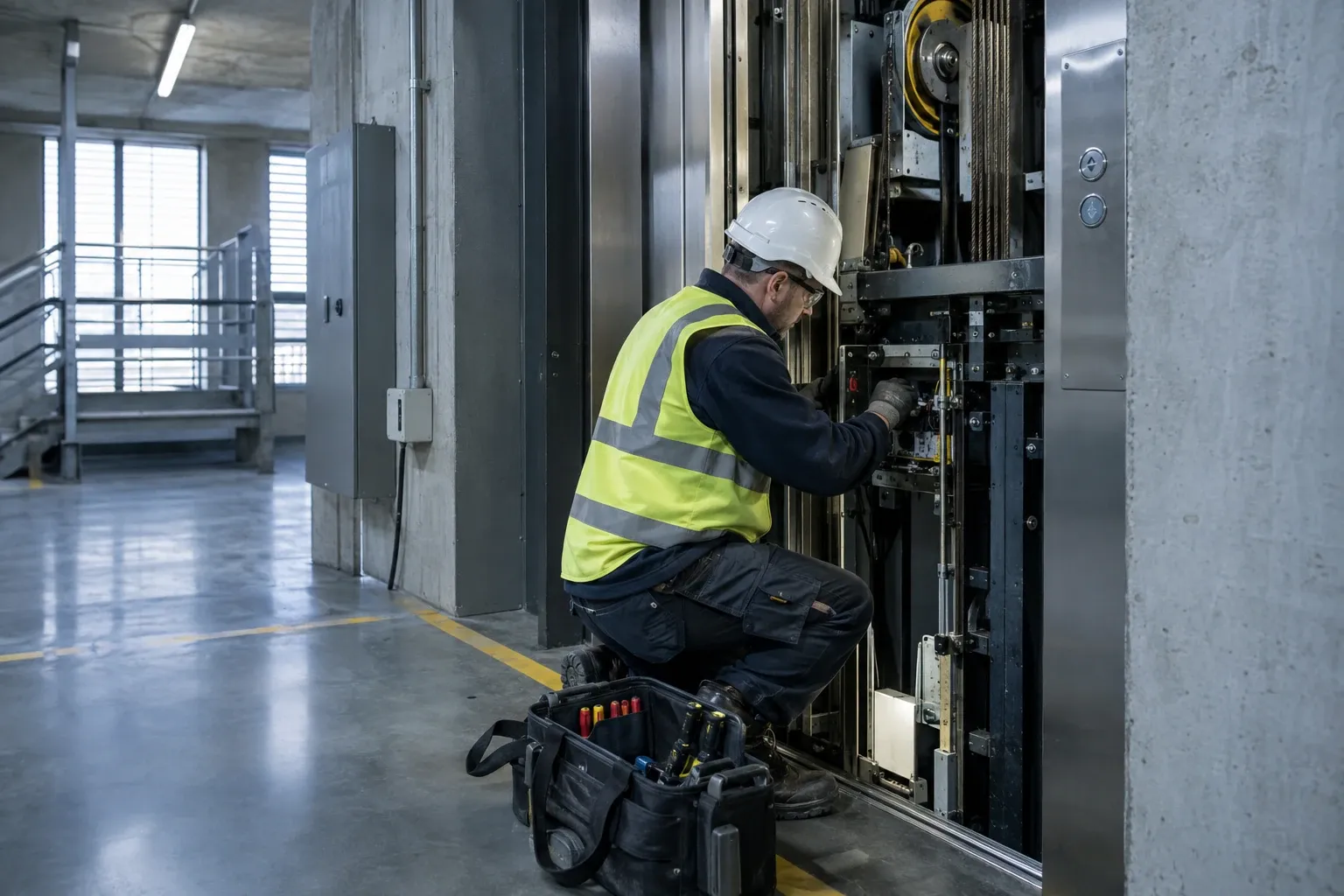
If you manage a workplace lift, the key question is not simply how often it should be serviced. The right maintenance plan depends on the lift, how it is used and its condition, while legal thorough examinations are a separate requirement for many lifts used at work. Knowing the difference helps you compare service proposals and follow up on defects without assuming that one visit covers everything.
What does lift maintenance cover, and what does the law require?
Maintenance is the planned work that keeps a lift in safe working order, such as servicing, adjustments and replacing worn parts. For work equipment, PUWER requires maintenance; LOLER separately requires thorough examination of lifting equipment by a competent person. The HSE stresses that a thorough examination is not a substitute for routine maintenance, so a service visit should not be treated as proof that the examination duty has been met. See the HSE’s guidance on maintenance of work equipment and thorough examinations.
For lifts used at work, the usual LOLER interval is at least every six months for carrying people and every 12 months for goods-only lifts, unless a competent person has established a written examination scheme. Use the lift’s actual purpose and scheme to confirm the applicable interval. The HSE also distinguishes public passenger lifts that are not used by people at work: whether LOLER and PUWER apply depends on the circumstances and the employer’s control of the equipment. Its passenger lift guidance explains that distinction.
What should you check before choosing a maintenance arrangement?
Start with the lift itself: record its type, location, age if known, usage, recurring faults and any manufacturer’s maintenance instructions. Note whether it carries people, goods or both, and whether access, loading patterns or the building environment create particular demands. Give prospective contractors the same information so you can compare the scope of their proposals on a like-for-like basis.
Then check what each service arrangement actually includes. Clarify planned visits, routine checks, call-out arrangements, response terms, labour and parts coverage, exclusions, and how work is recorded. Ask who will carry out repairs, how urgent faults are escalated and whether the contractor will flag issues that need a separate examination or specialist assessment. Avoid relying on a broad label such as “full maintenance” without a written schedule of tasks and exclusions.
Keep the maintenance contract distinct from the LOLER examination arrangements. HSE guidance says the competent person carrying out the examination should be sufficiently independent and impartial, and should not be the same person who undertakes routine servicing. Ask who will provide the examination report, where defects will be recorded and who in your business will track corrective work. For a wider building schedule, planned maintenance arrangements can help you coordinate the lift with other assets without confusing their separate inspection duties.
Which maintenance option suits your lift and site?
A planned service contract can make visits and responsibilities clearer, particularly where lift downtime would affect access or daily operations. A more limited arrangement may suit a straightforward lift where you manage scheduling and call-outs separately, but you will need to ensure the necessary maintenance and examinations are still arranged. Compare the full scope, exclusions and operational impact rather than judging by the visit frequency alone.
Ask each provider to explain how its proposed schedule reflects the lift manufacturer’s instructions, usage and condition. Find out how parts availability, breakdowns outside planned visits and access to the site are handled. If one contractor offers both servicing and thorough examinations, ask how examination independence is protected. The HSE says the same person should not service and thoroughly examine the equipment, because that would mean assessing their own maintenance work.
How do you put the arrangement into practice?
Before work starts, agree in writing:
- which lift and components are covered;
- planned visit tasks and the process for reporting completed work;
- how faults, emergency call-outs and repair approvals are handled;
- who arranges LOLER thorough examinations and receives the reports;
- who reviews recommendations, authorises repairs and confirms actions are closed.
Keep a record for each lift containing service reports, examination reports, defect notices, repair evidence and the date the next examination is due. The HSE says examination reports should identify the date of the examination, the next due date and defects that are or could become dangerous. Make those records accessible to the people responsible for maintenance and site safety.
How can you tell whether the plan is working?
Review the records after each service and examination. Check that scheduled visits took place, reported faults have an owner and deadline, and completed repairs have supporting documentation. Monitor repeat breakdowns and recurring defects: they may justify a discussion with the maintenance provider about the schedule or the condition of the lift, but do not adjust examination intervals without the competent person’s input.
If an examination identifies a defect that is, or could become, dangerous, follow the report and prevent use where required until the problem is remedied. The HSE says a dangerous defect must be reported immediately to the dutyholder; the written report records the findings and required action. Make sure staff know how to report problems and who can isolate the lift, and document the decision to return it to service after repairs are complete.
Frequently asked questions
Does a lift service count as a LOLER thorough examination?
No. Routine servicing and maintenance help keep work equipment in good repair; a LOLER thorough examination is a separate, systematic examination by a competent person, followed by a written report. The HSE advises that the person examining the lift should not be the same person who carries out its routine maintenance, so ask how the contractor keeps those roles sufficiently independent.
How often does a workplace lift need a thorough examination?
Under LOLER, a lift used to carry people at work is generally examined at least every six months, while a lift used only for goods is generally examined every 12 months. A competent person can instead set intervals through a written examination scheme. Check the lift’s use and its current scheme rather than assuming the service contract sets the statutory interval.
What should you do if an examination report identifies a dangerous defect?
Follow the report’s instructions and prevent use where the defect makes continued operation dangerous. The HSE says dangerous defects must be reported to the dutyholder, and the lift must not be used until the risk is dealt with. Make sure responsibility for arranging repairs and confirming safe return to service is clear, and keep the report and evidence of follow-up with the lift’s records.
In this section Maintenance