How to plan and check a LOLER thorough examination
If you manage lifting equipment at work, a service sticker alone does not show whether its LOLER examination is current. Know what must be examined, who can do it and how to act on the report.
By Daniel Foster · · 4 min read
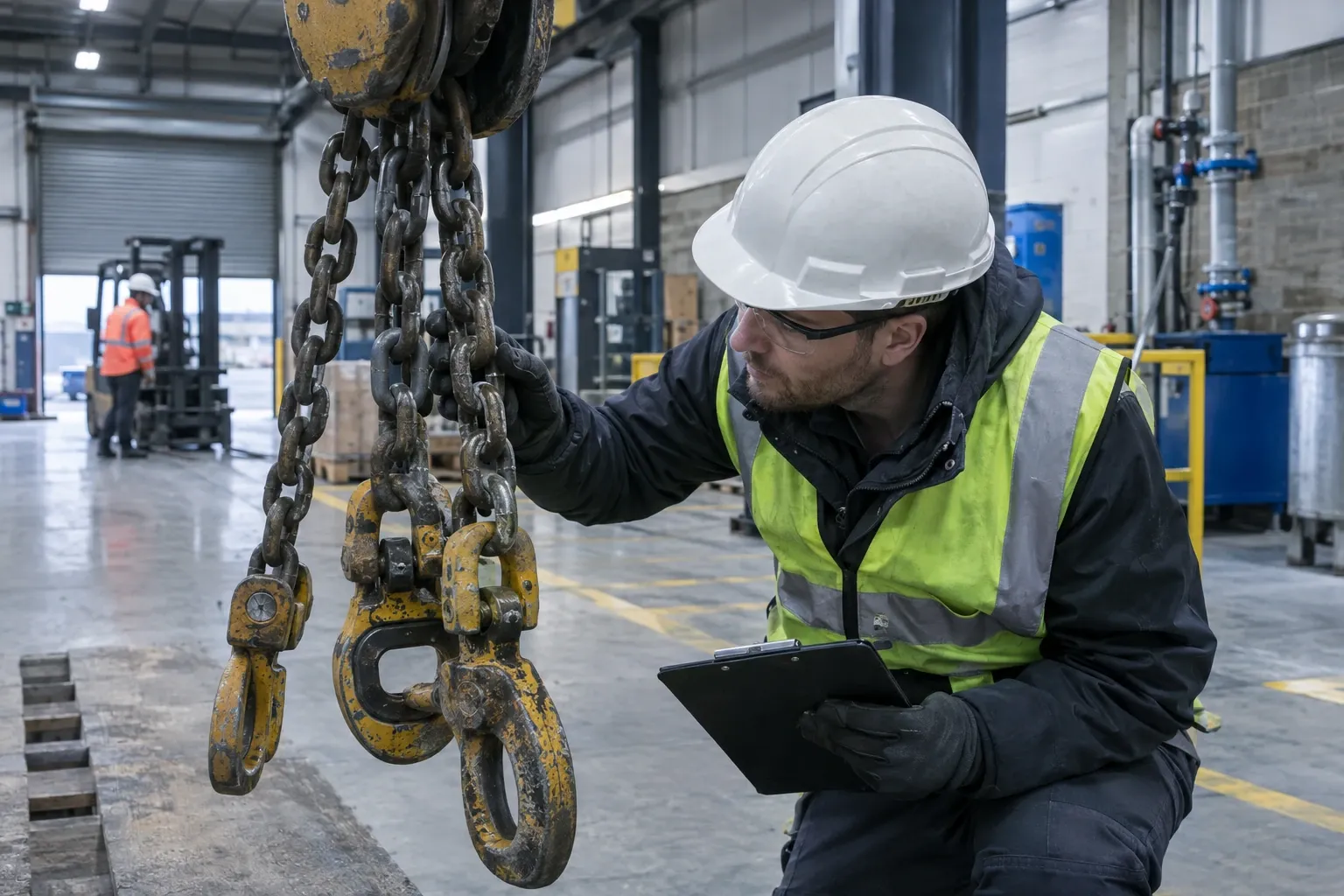
A missed examination, an unclear equipment list or a report that nobody follows up can leave a business unsure whether lifting equipment should remain in use. Under the Lifting Operations and Lifting Equipment Regulations 1998 (LOLER), the dutyholder must arrange thorough examinations in relevant circumstances and keep the resulting reports. The process is separate from routine maintenance: the examiner assesses safety-critical parts, records defects and states when the next examination is due. Here’s how to set the scope, choose a competent examiner and deal with the findings.
LOLER sits within wider duties for equipment on site, covered in our industry guide.
What does the examination cover, and when is it due?
A LOLER thorough examination is a systematic, detailed assessment of lifting equipment and its safety-critical parts. It is carried out by a competent person, who must provide a written report. The exact scope depends on the equipment and the examiner’s professional judgement; the aim is to identify defects or deterioration that could affect safe use. The HSE’s thorough examination guidance explains the process and reporting duties.
Unless a competent person has drawn up an examination scheme specifying different intervals, the usual maximum intervals are:
- Six months for lifting accessories, such as slings, and equipment used to lift people.
- Twelve months for other lifting equipment.
An examination scheme is a written plan setting out what equipment or parts should be examined and at what intervals. It can specify different periods; do not assume that it automatically extends the time between examinations. Check the scheme and its basis with the competent person. Examinations may also be required before first use, after installation or assembly where safety depends on those conditions, and after exceptional circumstances such as damage, failure or a significant change.
How do you choose a competent examiner?
LOLER does not define a competent person by a particular job title or certificate. HSE guidance says the person needs appropriate practical and theoretical knowledge and experience of the type of equipment being examined, so they can identify defects and assess their significance. They should also be sufficiently independent and impartial to make objective decisions.
When arranging an examination, give the examiner an accurate list of equipment, its location, use, age or relevant history, and any known changes, damage or repairs. Ask what equipment and safety-critical parts are included, whether an examination scheme applies, and how urgent findings will be communicated. For a wider view of inspection, servicing and compliance responsibilities, see the industrial equipment duties. Remove the space after the opening parenthesis in this link before publication.
How is a thorough examination different from a service?
A service is maintenance; a LOLER thorough examination is a separate statutory assessment. A service may include adjustments, lubrication or replacement of parts, while the thorough examination focuses on whether the equipment and its safety-critical parts remain safe to use. A routine maintenance visit or pre-use check does not, by itself, count as a thorough examination. HSE makes this distinction in its guidance on industrial lift trucks.
Plan both activities, and make sure the examiner knows about relevant repairs or changes. If replacement parts affect safety, or exceptional circumstances may have jeopardised safety, ask whether an examination is needed before the equipment is used again. Do not wait for the next scheduled examination to address maintenance needs or a defect noticed by an operator.
What should you do before and after the examination?
Before the visit, identify each item and accessory, locate existing examination reports and make the equipment safely accessible. Tell the examiner about unusual operating conditions, heavy use, environmental exposure, changes in use and any reported faults. Confirm who on your side will receive the findings and decide whether equipment can be isolated promptly if a serious defect is found.
Afterwards, check that the written report identifies the equipment, gives the examination date and states when the next examination is due. It should describe defects that are, or could become, a danger to people. Keep the report and record actions against each finding. HSE guidance says serious defects must be reported immediately to the dutyholder verbally, then in writing, with a copy sent to the relevant enforcing authority.
How do you check the result and close out defects?
Treat the report as a decision record, not just evidence that someone visited. Confirm that the equipment listed matches your inventory, check the due date against your examination schedule, and assign an owner and deadline for every action. Where a defect makes continued use unsafe, take the equipment out of service and control access until it is made safe. Ask the competent person whether repairs require a further examination before return to service.
Keep routine inspection and maintenance records alongside examination reports, but do not confuse them. HSE advises that thorough examination does not remove the need to maintain lifting equipment under PUWER. Review your register whenever equipment is moved, altered, repaired, taken out of service or brought back into use. That gives site managers a reliable basis for tracking examinations and following up findings.
Frequently asked questions
Does a LOLER thorough examination replace routine servicing?
No. A thorough examination is a systematic assessment of the equipment and safety-critical parts by a competent person. Routine maintenance and inspections are separate duties under PUWER, the Provision and Use of Work Equipment Regulations. Keep servicing and pre-use checks in your maintenance system even when a thorough examination has recently been completed.
Can the company that services the equipment also examine it?
An organisation may provide both services, but HSE guidance says the person carrying out the thorough examination should not be the same person who maintains the equipment. This helps avoid having someone assess their own maintenance work. Check the examiner’s practical and theoretical knowledge of the specific equipment and their impartiality.
Is an overload test required at every thorough examination?
Not usually. HSE says most lifting equipment does not need routine testing as part of a thorough examination, and some overload tests can damage equipment. The competent person decides whether testing is necessary and what is appropriate for the equipment. Ask for the reason and scope if a test is proposed.
What should I do if a report identifies a dangerous defect?
Follow the report’s instructions and do not return equipment to use if the defect means it is unsafe. The competent person must immediately report serious defects verbally to the dutyholder, followed by a written report; a copy must also go to the relevant enforcing authority. Arrange repairs and any required further examination before use resumes.
In this section Industry