Keep machine tools reliable with a maintenance plan that fits
A machine tool that drifts out of accuracy or fails mid-shift can disrupt production and create safety risks. Set maintenance around the machine, the work it does and the skills available on site.
By Daniel Foster · · 4 min read
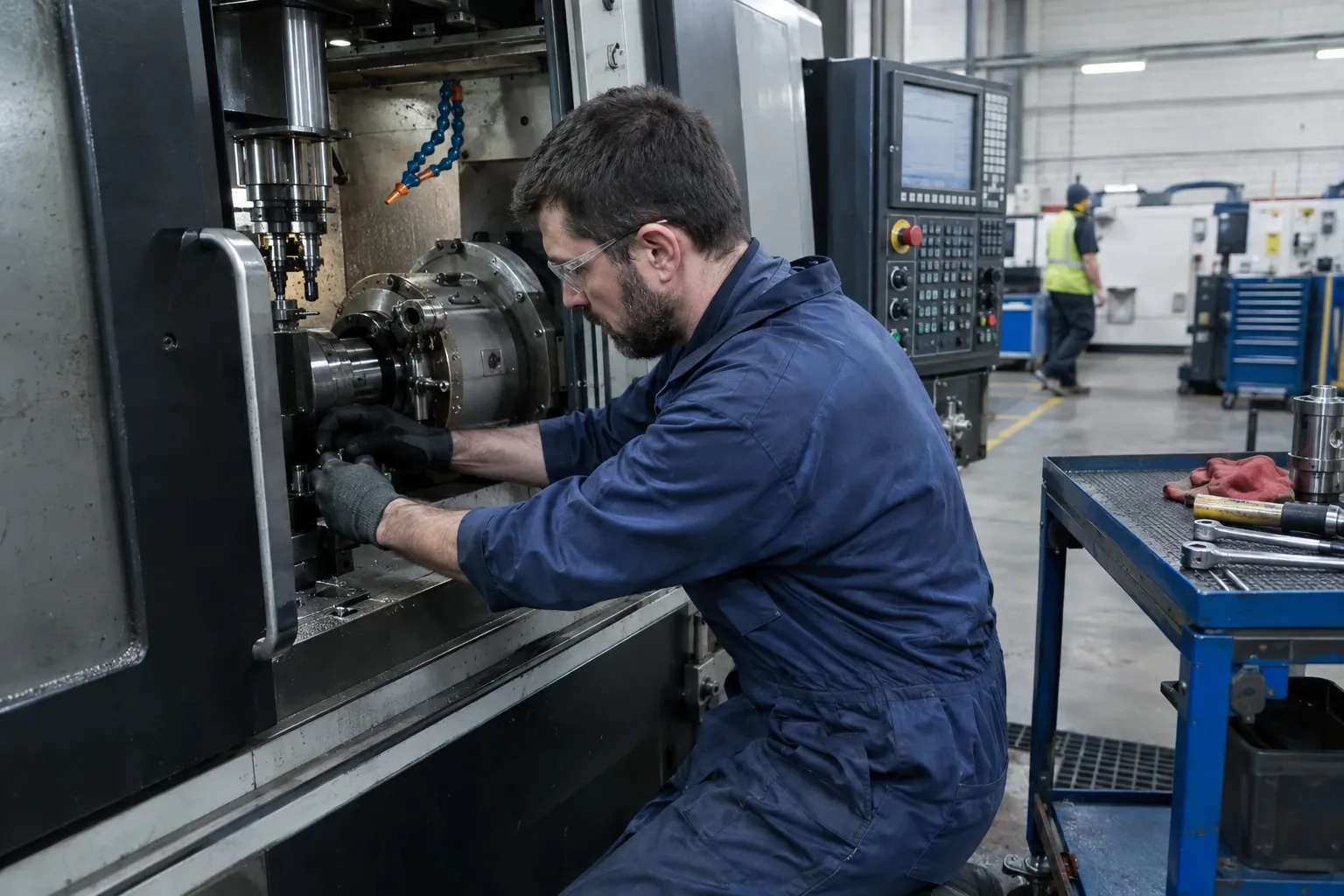
Machine tool maintenance is not just a response to breakdowns. For a UK business, it combines routine care, planned servicing and safe fault repair, with a level of attention suited to each machine’s condition and use. The practical starting point is to identify what can fail, what operators can check, and which tasks need a competent maintenance specialist. From there, you can compare in-house, manufacturer and independent support, agree a workable schedule, and check whether the work is improving reliability without compromising safety.
What needs maintaining on a machine tool?
Start with the machine’s manual and the tasks it performs. A CNC machining centre, lathe, grinder and manual mill have different components and failure modes, so a generic checklist can miss important points. Map the machine’s main systems, such as its spindle and axes, lubrication, coolant, hydraulics or pneumatics, electrical controls, tool-changing equipment and safety devices, where fitted.
Separate routine checks from technical servicing. Operators may be able to spot leaks, unusual noise or vibration, damaged cables, blocked filters, contamination and visible guard damage. The maintenance plan should state what they can check, what needs a competent technician, and how to report a defect. Do not ask staff to remove guards or carry out adjustments beyond their training and authorisation.
Under PUWER, employers must ensure work equipment is maintained in an efficient state, in efficient working order and in good repair. The HSE’s maintenance guidance also says to use the manufacturer’s instructions as a guide, especially for safety-critical features. For the broader equipment inspection and compliance context, see this guide to industrial equipment duties.
Which maintenance approach suits your workshop?
The right balance depends on machine complexity, in-house skills, production demands and the consequences of downtime. Most sites combine approaches rather than choosing just one.
Operator-led routine care keeps simple checks close to the people who use the machine. It can help identify developing problems early, but it is not a substitute for specialist inspection or repair. Provide a short checklist, define reporting routes, and make clear that a fault affecting safe operation means the machine must not be used until assessed.
In-house maintenance can suit businesses with competent staff, suitable tools and access to technical information. It offers direct control over scheduling and can be practical for routine tasks. Check that the team is equipped for the machine’s electrical, mechanical and control systems, and that complex work is escalated rather than attempted without the necessary competence.
Manufacturer or independent specialist servicing can provide machine-specific knowledge or additional capacity. When comparing providers, ask which makes and models they support, what the visit includes, what is excluded, whether inspection results are recorded, and how urgent faults are handled. A manufacturer’s service description can illustrate the range of possible checks: Mitsubishi Electric, for example, lists electrical, safety-circuit, axis and spindle checks among elements of its CNC preventive maintenance service. That is a provider’s own service scope, not a universal specification.
A separate PUWER inspection may help assess work equipment against relevant safety requirements, but it should not be treated as a replacement for servicing or repairs. If you also need dimensional or geometry checks, distinguish these from routine maintenance; CMM inspection services address measurement and inspection needs rather than general machine upkeep.
How can you turn the choice into a workable plan?
Begin by listing machines and recording their manufacturer, model, age, operating pattern, maintenance history and known defects. Rank them by the likely effect of failure on safety, quality and production. Then use the manuals, past breakdowns and staff feedback to decide which checks are daily or shift-based, which tasks are scheduled, and which are condition-led.
For each task, assign an owner and define the safe method. Maintenance can expose workers to unexpected start-up, moving parts, electrical hazards and stored pressure. The HSE advises stopping and isolating machinery before maintenance, locking off supplies where needed, and releasing stored energy. Make sure contractors understand site rules and how their work will be coordinated with production.
When requesting a service proposal, give suppliers the machine details and fault history. Ask for a written scope that identifies checks, consumables, adjustments, tests, exclusions, records and recommendations. Clarify whether repairs discovered during a planned visit are included or quoted separately, and how the machine’s safe return to production will be decided. Compare the scope and reporting, not just the visit price.
How do you check whether the plan is working?
Keep maintenance and fault records together. Note the date, machine, operating hours where available, work done, defects found, parts used, follow-up actions and the person responsible. If the machine has a maintenance log, PUWER requires it to be kept up to date; HSE’s PUWER guidance explains the maintenance duty and its application.
Review the records for repeated faults, overdue tasks, growing repair needs and recurring interruptions. Also check that guards and safety devices remain effective after work, and that unresolved issues have a named owner and target date. If faults recur soon after servicing, ask the provider to explain the findings and whether further investigation is needed.
A useful plan is one that matches the machine’s actual use, gives people clear responsibility and produces records you can act on. Update it after a major repair, machine modification, change in production or a pattern of repeated defects.
Frequently asked questions
How often should machine tools be serviced?
There is no single interval that suits every machine. Use the manufacturer’s maintenance instructions as a starting point, then account for operating hours, workload, environment, age, fault history and the consequence of failure. Set routine operator checks and planned service tasks separately, and revise the schedule if inspections, breakdowns or production changes show that the original interval is not suitable.
Can operators carry out machine tool maintenance?
Operators can carry out checks and routine tasks only where they have the necessary instruction, competence, tools and safe procedure. Work involving electrical systems, stored energy, guards, CNC controls or mechanical adjustment may need a specialist. Define authorised tasks clearly, and make sure faults are reported and the machine is not used when it is unsafe.
What should a machine maintenance record include?
Record the machine identity, date, operating hours if relevant, checks and work completed, defects found, parts changed, adjustments made, and who carried out or authorised the work. Include outstanding actions and the decision on whether the machine can return to service. A clear record helps you track recurring faults and keep any maintenance log up to date.
In this section Industry